Tag: Attorney

  • The Sorry State Of Nigeria’s Judiciary Among Others Makes The Battle Cry For A Revolution Inevitable By Francis Adewale

    The Sorry State Of Nigeria’s Judiciary Among Others Makes The Battle Cry For A Revolution Inevitable By Francis Adewale

    Lawyers
    Lawyers

    “Those who make peaceful revolution impossible will make violent revolution inevitable.”
                                                   – President John F. Kennedy (1962)

    This week may be one of the worst weeks for Nigerian judiciary and they might have made the much vaunted Sowore’s revolution inevitable. The first salvo was the list of judges released by the National Judicial Council replete with the names of their sons and daughters as well as hangers on. Second is the farcical decision in EFCC vs Kalu where the Supreme Court “suo motu” created a new section to the constitution of Nigeria by vacating a conviction duly given under an extant law. The strange rationale by the Supreme Court is that the presiding judge, now elevated to the Court of Appeal should not have pronounced the sentence. The Court conveniently ignored the fact that the accused counsel had invited the judge to come back and continue the hearing by a formal letter!

    Gone are the days when Nigerian judiciary is famously celebrated as the last bastion of defense for the common man. The days of Kayode Esho, Chukwudifu Oputa, Muhammed Uwais is long gone. Our judiciary is no more like Caesar’s wife, above board. The problem however is not necessarily down to the hydra headed monster of corruption alone but a more sinister evil called, nepotism. It is my humble opinion that an opaque process for selection of judges led us to where we found ourselves this week. And the problem did not start with the current chief justice. The dysfunction and bastardization have been long in coming, and as we will find out in this piece, the cancer has eaten deep into the fabric of this nation. The revolution is inevitable. 

    The Sorry State Of Nigeria’s Judiciary Among Others Makes The Battle Cry For A Revolution Inevitable By Francis Adewale 1Lawyers


    What precipitate this write up is a social media post by a good friend of mine and I obtained his permission to repost his comment with my personal edits:
    “It took Orji Kalu only 4 months including Covid lockdown challenge to move from the High Court to Supreme Court to get his so called sound judgment from Supreme Court while it took ten years to get his case completed at the High Court level. Ten good years! And we are told justice in Nigeria is not cash and carry? The Supreme Court is preparing the ground for a revolution and very soon something extraordinary will take place. The same Supreme Court that will give 2021 and 2022 court date for poor defendants, sat and summarily decide a case within 4 months while cases of those facing a life sentence languish in the labyrinth of jungle justice!”

    My first response to the post, is to retort that the problem did not start with judiciary, but they seem to have led the “nunc dimitis” for the internment of democracy in Nigeria. The judiciary may have pushed us to the praecipe but they were not the only one. We all recalled the impunity days of PDP rule and how they ride roughshod on people’s right, celebrating acquisition of jets obtained from corrupt practices while hordes of masses suffer the indignity of scrapping for foods from the gutter. Towards the end of that era, we all thought, if we can just get a man of integrity into Aso Rock, someone who will brook no atom of corruption, we will change the country. The election of 2015 seems to have lulled Nigerians into thinking that all we need is someone or a duo with integrity, so we elect Buhari and Osinbajo, a puritan and a pastor and went home satiated. What we were not prepared for or more appositely choose to ignore is the fact that the vehicle that brought them into governance is none other than the decrepit system that PDP used to feather their nest. In the first 4 years, we were told that the problem is with the National Assembly where the legistlooters shifted their control of the vortex of power in Abuja, opposing every anti-corruption moves of the executives. Then come the last election where the ruling party now controls the executive and legislative arm, but corruption runs through the gamut of the judiciary and Aso Rock looks the other way while nepotism festers in its rank.

    It is as if the cancer has completely swallowed up the entire fabric of the nation. Cases involving the poor dragged on for years while those who can afford senior advocate can get quick justice. Many warned that this will sound the death knell of democracy in Nigeria. Every attempt to even build on free and fair election has been truncated by the judiciary. What with the recent confounding judgment from Imo and Bayelsa. Our two gargantuan political parties now owned our judiciary lock, stock and barrel. They sit in smoke filled rooms to determine who will be governors, legislators and judges, and those who will play ball are readily appointed as pawns in the chest board of the Nigerian ruling class, wives, nephews, cousins, sons and daughters are made judges and senior advocates overnight without recourse to any modicum of meritocracy. A friend of mine recently quipped that the problem of nepotism is not just that it defeats meritocracy and breeds mediocrity but that it infects the entire body politics and renders it comatose. Corruption can be traced, and ill-gotten wealth recovered but nepotism is more sinister. Those who obtain position of power and authority through nepotism hold fealty only to their masters who appointed them. Such appointee will readily twist the constitution, made up section that does not exist all at the behest of their “godfather”. It is insidious and evil.

    I graduated from Nigerian Law School 30 years ago, after an excellent stint at Great Ife. My class at Ife, drawn from the north, east, west middle belt and south-south has in its rank some of the best legal minds any country will be proud of. We graduated with high hopes to take on the world and change the land. Few of us found ourselves abroad on scholarship where we flourish and excel. Those in legal practice in Nigeria, either at the federal or state ministry of justice or private practice are the ones my heart bleeds for, especially those without access to members of the National Judicial Council. I have had the privilege to advance my career abroad as an attorney and public defender. I frequently sit on panels that recommend colleagues for appointment as judges in a fair, open and transparent process; something my colleagues in Nigeria could only dream of.

    When I look at the state of Nigerian legal practice my heart bleeds. The career growth of colleagues in the legal profession in Nigeria is stunted not for lack of excellence but influence in the right place. Influence peddling is an art form in Nigeria and politicians used to have the exclusive preserve of selling it to the highest bidder, but our Judicial Council seems to have mastered the art. The problem will not be this pronounced if the sons and daughters they are foisting on Nigerian judiciary are steeped in the Nigerian experience or have a modicum of merit. As many of my colleagues are apt to complain, majority of the recent appointees hardly spend few years in Nigeria. They all went to schools abroad. Totally devoid of the Nigerian experience, and constantly removed from the everyday life Nigerians suffers under. Majority of them lives in the gilded mansions of their forbears in Abuja and other state capitals, where they are rarely touched by the “better angels of our nature” to use the phrase coined by Abraham Lincoln. It is therefore no surprise that they care only for what their “godfather” demand.

    Let me however warns that the biggest mistake we could make is to think that the rot is only in the heart of our judiciary. Think again. Nepotism is next door, next street, next town and everywhere in Nigeria. It rampages through the land, be it North, East or West. Just look at our churches and mosques, who do you see minister or lead the prayers when the founder/visioner is not around? You guess right,  if you say their sons and daughters. Gone are the days when Pa Fadayomi push to have a meritorious doctor of aerodynamics succeed him. Gone are the days when the leader of the faithful in Nigeria is selected by their aptitude in the knowledge of the Quaran. Nowadays, the exit of the leader is the beginning of the reign of the progeny. It has infected our colleges and universities, scholarship and opportunities that used to be available on merit are now exclusive preserve of the vice chancelor’s children and family members. Woe betide the school senate members that dare ask questions. Advertisement for jobs that has already been reserved for the children of the privileged are means to extort money in the form of application fees a la Abba Moro immigration recruitment scheme. A recent recruitment without advertisement at our apex bank reported by Sahara Reporters shows that successful applicants names were picked out of the rolodex of the governor. Commercial Banks staff are not an exemption, they are either recruited based on sex appeal or influential ministers/senators’ “recommendation” which doesn’t come easy for the educated but less privileged applicants.

    A friend concluded an animated discussion on social media on this issue with a distinctively Nigerian resignation: “It is clear that those who do not want things to work properly in Nigeria are more powerful than those who are working towards finding solutions to our problems.” Again, my response is what do we have to lose if we embrace Omoyele Sowore’s revolution, even with its youthful disdain for experience? Especially when our current experienced leadership seems to treat the Nigerian masses with contempt. Look at it this way: They do not need our votes to win election, as they could procure midnight judgment in Abuja a la Bayelsa and Imo. They do not need to legislate to fill any lacunae in our constitutional experience as the Supreme Court proved in Kalu’s case. In fact, as long as oil flows and they have the means to fill their Cayman Island bank accounts, we may as well not exist. Greed and avarice have become the directive principle of Nigerian ruling class. To rescue ourselves from their vice grip, we need revolution now!

    Francis Adewale
    Tioluwanimi@gmail.com

    Opinion

    AddThis

    : 

    Original Author

    : 

    Francis Adewale

    Disable advertisements

    : 
    The Sorry State Of Nigeria’s Judiciary Among Others Makes The Battle Cry For A Revolution Inevitable By Francis Adewale
    Read More
    http://saharareporters.com/2020/05/09/sorry-state-nigeria%E2%80%99s-judiciary-among-others-makes-battle-cry-revolution-inevitable

    Views: 0
  • Interior Minister, Aregbesola, Holds Meeting With Malami Over Prison Decongestion

    Interior Minister, Aregbesola, Holds Meeting With Malami Over Prison Decongestion

    Interior Minister, Aregbesola, Holds Meeting With Malami Over Prison Decongestion 4

    Interior Minister, Aregbesola, Holds Meeting With Malami Over Prison Decongestion 5


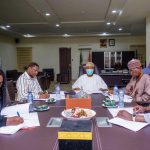
    Minister of Interior, Rauf Aregbesola, has held a gathering with the Attorney-General of the Federation, Abubakar Malami (SAN), on steps to be taken to make sure the decongestion of correctional centres (previously prisons) in Nigeria.

    This is coming three days after inmates on the Kaduna Correctional Centre tried a jailbreak following the worldwide outbreak of Coronavirus.

    The assembly was additionally attended by the Chief Judge of FCT, Justice I.U Bello.

    “Minister of Interior, Ogbeni @raufaregbesola held a midnight assembly on the method and process to radically decongest @CorrectionsNg’s custodial centres with AGF and Minister of Justice, Abubakar Malami; Chief Judge of FCT, Justice I.U Bello and different authorities officers,” a tweet by the Ministry of Interior reads. 

    The minister has beforehand held comparable conferences to deliberate on the right way to handle the custodial centres.

    Recall that 5 inmates on the Kirikiri Correctional Centre died of electrocution, which investigation by the Controller-General of the Nigeria Correctional Service, Ja’afaru Ahmed, revealed that the incident was attributable to overpopulation of the correctional centre.

    Civil society organisations are additionally calling on the federal government to make sure the decongestion of correctional centres and police cells to include the unfold of the virus.

    Currently, the nation has 74,127 inmates in 244 centres throughout the nation with 52,226 awaiting trial.

    News

    AddThis

    : 

    Original Author

    : 

    Saharareporters, New York

    Disable commercials

    : 
    Interior Minister, Aregbesola, Holds Meeting With Malami Over Prison Decongestion
    Read More
    http://saharareporters.com/2020/04/03/interior-minister-aregbesola-holds-meeting-malami-over-prison-decongestion

    Views: 0

  • Legal Issues Arising From Management Of Covid-19 Patients By Ahmed Adetola-Kazeem

    Legal Issues Arising From Management Of Covid-19 Patients By Ahmed Adetola-Kazeem

    Legal Issues Arising From Management Of Covid-19 Patients By Ahmed Adetola-Kazeem 6

    Legal Issues Arising From Management Of Covid-19 Patients By Ahmed Adetola-Kazeem 7


    A lot of legal issues are bound to arise as an aftermath of the outbreak of Coronavirus otherwise referred to as COVID-19.  There is therefore a need to shed light on some of the issues that may arise and how to navigate them. This article will x-ray the rights of patients, the rights of health workers and the basic minimum obligations of the government.

    The Code of Medical Ethics in Nigeria 2008 lists acts that constitute professional negligence. Rule 29.4 of the Code outlines some of these acts as follows:-

    a)      Failure to attend promptly to a patient requiring urgent attention when the practitioner was in a position to do so;

    b)     Manifesting incompetence in the assessment of a patient;

    c)      Making an incorrect diagnosis particularly when the clinical features were so glaring that no reasonable skillful practitioner could have failed to notice them; 

    d)     Failure to advise, or proffering wrong advice to  a patient on the risk involved in a particular operation or course of treatment, especially if such an operation or course of treatment is likely to result in serious side effects like deformity or loss of organ, or function;

    e)      Failure to obtain the informed consent of the patient before proceeding on any surgical procedure or course of treatment when such consent was necessary; 

    f)       Making a mistake in treatment e.g. amputation of the wrong limb, carelessness that results in the termination of a pregnancy, prescribing the wrong drug, or dosage in error for a correctly diagnosed ailment, etc;

    g)     Failure to refer, or transfer a patient in good time, when such a referral or transfer was necessary;

    h)     Failure to do anything that ought reasonably to have been done under any circumstance for the good of the patient;

    i)       Failure to see a patient as often as his medical condition warrants or to make appropriate comments in the case notes of the practitioner’s observations and prescribed treatment during such visits. It also includes failure to communicate with the patient or with his relatives as may be necessary with regards to any developments, progress or prognosis in the patient’s condition.


    Rule 11.2 of the 2008 Code of Medical Ethics in Nigeria provides that, “A physician shall preserve absolute confidentiality on all he knows about his patient even after the patient has died.”

                 Rule 44 of the Code of Medical Ethics has extensive provisions on Confidentiality and when disclosure of information can be made. The Rule provides in part that:

    “Disclosure of information on the patient by the doctor can only be made following an informed consent of the patient in writing. It is clear that the ethic covers even such information as induced abortion, venereal disease, attempted suicide, concealed birth and drug dependence but would exclude situations in which a discretionary breach of confidentiality is necessary to protect the patient or the community from danger and this must be made clear to the patient at the time of the confidential disclosure. Where statutory notification of disease is involved, the consent of the patient is not required.”            

                Confidentiality: To Disclose Identity Of Covid-19 Patients Or Not To Disclose?

    COVID-19 is an infectious disease caused by a newly discovered coronavirus. Most people infected with the COVID-19 will experience mild to moderate respiratory illness and recover without requiring special treatment.  Older people, and those with underlying medical problems like cardiovascular disease, diabetes, chronic respiratory disease, and cancer are more likely to develop serious illness.[1]

    The Federal Ministry of Health confirmed the first case of COVID-19 in Nigeria on the 27th of February 2020. It is the case of an Italian citizen who works in Nigeria and returned from Milan, Italy to Lagos, Nigeria on the 25th of February 2020. In reaction to the report, the social was divided between those who want the name of the Italian disclosed and those that preferred it remains confidential. The outcry was even more when the Chief of Staff to the President tested positive according to reports from various media houses[2], but the Minister of Health decided to keep mute on the identity of the President’s aide who contacted the virus, citing confidentiality.

    It will ordinarily be wrong to disclose the medical status of someone infected with COVID-19, for instancethe case of the Italian who was the index case. However in view of the proviso to Rule 44 of the Code of Medical Ethics 2008 which provides that a discretionary breach of confidentiality is necessary in order to protect the community from danger, I am of the view that the test results of popular figures who hold strategic offices like the Chief of Staff to the President or a Governor must be disclosed to guaranty public safety. This is necessary in view of the countless number of people from all works of life they come in contact with on a daily basis.  It will be correct to have made their status public in the overriding interest of the public, since it will enable those who have come in contact with them isolate, just like we have seen in the cases of the British Prime Minister, the Bauchi State Govenor, Prince Charles, the First Lady of Canada and many more. We must commend those who announced their status in public themselves-it is the best thing to do in the interest of humanity

    The World Health Organization (WHO) provides additional guidelines for the management of coronavirus patients specifically.[3]

    Health workers should:

    •follow established occupational safety and health procedures, avoid exposing others to health and safety risks and participate in employer-provided occupational safety and health training; 

    •use provided protocols to assess, triage and treat patients; 

    •treat patients with respect, compassion and dignity; 

    •maintain patient confidentiality; 

    •swiftly follow established public health reporting procedures of suspect and confirmed cases; 

    •provide or reinforce accurate infection prevention and control and public health information, including to concerned people who have neither symptoms nor risk;

    •put on, use, take off and dispose of personal protective equipment properly;

    •self-monitor for signs of illness and self-isolate or report illness to managers, if it occurs; 

    •advise management if they are experiencing signs of undue stress or mental health challenges that require support interventions; and 

    •report  to  their  immediate  supervisor  any  situation  which  they  have  reasonable  justification  to  believe presents an imminent and serious danger to life or health.


    Doctors and health workers in Nigeria must endeavor to digest the guidelines in the Code of Medical Ethics as well as the WHO Guidelines for management of Coronavirus victims and ensure they work strictly by their provisions. A breach of these duties have dire consequences. 

    Options Available To Covid-19 Patients Who Are Victims Of Medical Negligence

    A Coronavirus patient who has suffered medical negligence has a number of options:

    1. He could file a complaint with the regulatory body (e.g. the Medical and Dental Council of Nigeria, in the cases involving a Doctor). The Doctor will in the first instance be investigated by the Medical and Dental Practitioners Investigation Panel, after which he will be tried by the Medical and Dental Practitioners Disciplinary Tribunal. If found culpable,  the Doctor may be warned, suspended from practicing for a period not exceeding 6 months or in very serious cases, have his name can be removed from the Register of Medical Practitioners. The Medical and Dental Practitioners’ Disciplinary Tribunal does not award monetary damages.

    2. A suit can be filed against the Medical Doctor, the Hospital, Agency or Government in the High Court for Medical Negligence and monetary damages will be awarded if the Defendant(s) are found culpable.

          3.  If there is an element of Crime, a report could be made to the Police who would conduct Criminal Investigation and where the investigation reveals gross negligence, recklessness or wanton disregard for life of the victim, the police can prosecute or forward the case file to the office of the Attorney General of the State for possible prosecution in deserving cases.  

    A Need To Do More For Doctors And Other Professionals In The Health Sector

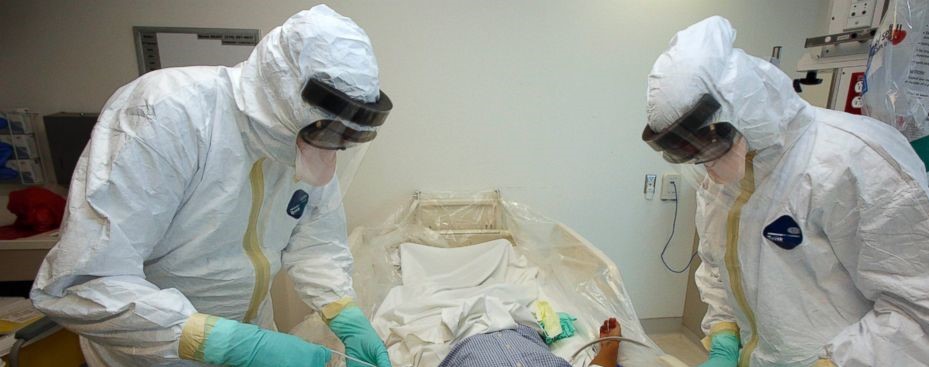
    Health workers are at the front line of any outbreak response and as such are exposed to hazards that put them at risk of infection with an outbreak pathogen (in this case COVID-19). Hazards include pathogen exposure, long working  hours,  psychological  distress,  fatigue,  occupational  burnout,  stigma,  and  physical  and  psychological violence. 

    During the outbreak of Ebola more than 500 health care workers died in Guinea, Liberia and Sierra-Leone alone. We also lost some of our finest doctors and health workers to the disease in Nigeria, the most prominent being Dr. Stella Adadevoh, who is credited with having curbed a wider spread of the Ebola virus in Nigeria by placing the index patient, Patrick Sawyer, in quarantine despite pressures from the Liberian  government. As we speak, The coronavirus is waging a war of attrition against health care workers throughout the world, but nowhere is it winning more battles at the moment than in Italy and in Spain, where protective equipment and tests have been in severely short supply for weeks. In Spain 13.6% (6500) of those affected with the coronavirus are health workers and in Italy 10% (7400) of those affected with the virus are health workers. [4] In New York dozens of health workers have been affected with the virus, while hundreds are in quarantine.[5] According to reports filtering in as the time of concluding this article, three health workers have been infected with COVID-19 in Abuja, Nigeria.[6]

    Human Rights Watch research into health system collapse in Hungary and Venezuela suggests the nations’ mismanaged, underfunded, and understaffed public healthcare system is poorly equipped to handle a COVID-19 outbreak. Patients and medical experts described a lack of basic hygiene protocol, lack of isolation rooms, and a shortage of health professionals, doctors and nurses, and medical supplies in general.

    The situation is not too different in Nigeria at the moment and except something drastic is done we might be witnessing a devastating effect of the pandemic. Nigeria’s, public health capacity has been diminished by large scale public sector corruption. Medical personnel lack surgical masks and local supplies have been diverted and shipped to other markets partly due to corruption. Many states are ill-prepared to combat the impeding surge in patients. A senior health worker with a government hospital in Abuja, in an interview with Sahara Reporters, lamented the lack of quality Personal Protective Equipment for them, adding that government must invest in the protection of health workers at the frontline of the battle against the virus. He said, “The unfortunate thing is that the government is not providing us with what to work with. It is sad that our PPE are not up to the world standard and can be penetrated by viruses. Some of us (health workers) have to use our personal funds to purchase gloves as we do not trust the ones government supplied. Nigerians should please remember us in their prayers and government should provide us with what we really need to work.” [7]

    There was report that in Bauchi State a Coronavirus patient rejected the isolation centre at the Bauchi Specialist Hospital and went back home while describing it as “too dirty”.[8]  

    It is disappointing to hear that the hazard allowance for doctors and health workers is N5,000 per month in Nigeria. The amount is very paltry compared to the risks and the attendant emotional and psychological stress suffered by the health-care workers (HWCs) particularly during monumental outbreaks like this. Unfortunately, when a patient is mismanaged, these doctors and health workers bear the burden of paying huge compensation and sometimes losing their jobs. More importantly, the brain-drain in the health sector is monumental, almost all my friends who are doctors, work abroad. Unfortunately, there are concerted efforts by the US Government to engage foreign Doctors to further fortify its health work force as COVID-19 ravages. Many young Nigerian doctors are already considering the offers because the Nigerian government has paid little attention to their welfare and the welfare of the general health workforce. To stop the exodus of our doctors, who are already in short supply, the government must act fast by improving their welfare packages in line with acceptable international standards.

    The psychological needs of doctors and health workers are also often ignored. Unsafe working conditions contribute to health worker attrition in many countries due to work-related illness and injury and the resulting fear of health workers of occupational infection, including from HIV and Tuberculosis. The 2006 World Health Report – Working Together for Health reported on a severe health workforce crisis in fifty-seven countries, most of them in Africa and Asia. [9]

    Protecting the occupational health of health workers is critical to having an adequate workforce of trained and healthy health personnel. Governments at the Federal and State levels are urged to do more by complying fully with the World Health Organization’s guidelines regarding the Rights of Health Workers while combating COVID-19. Some of the rights are:

    ·         assume overall responsibility to ensure that all necessary preventive and protective measures are taken to minimize occupational safety and health risks;

    ·         provide information, instruction and training on occupational safety and health, including; Refresher training on infection prevention and control(IPC); and Use, putting on, taking off and disposal of personal protective equipment(PPE);

    ·         provide adequate IPC and PPE supplies (masks, gloves, goggles, gowns, hand sanitizer, soap and water, cleaning supplies) in sufficient quantity to healthcare or other staff caring for suspected or confirmed COVID-19 patients, such that workers do not incur expenses for occupational safety and health requirements;

    ·         not be required to return to a work situation where there is continuing orserious danger to life or health, until the employer has taken any necessary remedial action;

    ·         allow workers to exercise the right to remove themselves from a work situation that they have reasonable justification to believe presents an imminent and serious danger to their life or health. When a health worker exercises this right, they shall be protected from any undue consequences; 

    ·         honour the right to compensation, rehabilitation and curative services if infected with COVID-19 following exposure in the workplace. This would be considered occupational exposure and resulting illness would be considered an occupational disease,

    ·         provide access to mental health and counselling resources; and 

    ·         enable co-operation between management and workers and/or their representatives. Etc.

    In conclusion, professional care givers for COVID-19 patients should uphold four basic principles formulated by Beauchamp and Childress in their book ‘Principles of Biomedical Ethics’ in order to protect themselves from liability for negligence. The four basic principles are autonomy, beneficence, non-maleficence and justice.

    Autonomy: People have the right to control what happens to their bodies. This principle simply means that an informed, competent adult patient can refuse or accept treatments, drugs, and surgeries according to their wishes. People have the right to control what happens to their bodies because they are free and rational. And these decisions must be respected by everyone, even if those decisions aren’t in the best interest of the patient.

    Beneficence: All healthcare providers must strive to improve their patient’s health, to do the most good for the patient in every situation. But what is good for one patient may not be good for another, so each situation should be considered individually. And other values that might conflict with beneficence may need to be considered.

    Non-maleficence: “First, do no harm” is the bedrock of medical ethics. In every situation, healthcare providers should avoid causing harm to their patients. You should also be aware of the doctrine of double effect, where a treatment intended for good unintentionally causes harm. This doctrine helps you make difficult decisions about whether actions with double effects can be undertaken.

    Justice: The fourth principle demands that you should try to be as fair as possible when offering treatments to patients and allocating scarce medical resources. You should be able to justify your actions in every situation. For instance, it will amount to a professional misconduct for a Health-care Worker to remove a poor man from the ventilator because a Senator was rushed in. 

    Ahmed Adetola-Kazeem is a partner in Adetola-Kazeem Legal Practice and specializes in Medical and Health Law

    Email: aadetolakazeem@gmail.com;aadetolakazeem@gaklp.com

    [1] https://www.who.int/health-topics/coronavirus#tab=tab_1(Accessed on the 28th of March 2020)

    [2] https://businessday.ng/coronavirus/article/abba-kyari-tests-positive-for-coronavirus-buhari-negative/

    https://www.channelstv.com/2020/03/24/buharis-chief-of-staff-abba-kyari-reportedly-tests-positive-for-coronavirus/ (Accessed on the 28th of March 2020)

    [3] Coronavirus Disease (Covid-19) Outbreak: Rights, Roles and Responsibilities Of Health workers, Including Key Considerations For Occupational Safety And Health”. https://www.who.int/docs/default-source/coronaviruse/who-rights-roles-respon-hw-covid-19.pdf?sfvrsn=bcabd401_0   (Accessed on the 26th of March 2020)

    [4] https://abcnews.go.com/Health/wireStory/collapsing-virus-pummels-medics-spain-italy-69789413 (Accessed on 26th March 2020)

    [5] https://www.washingtonpost.com/health/covid-19-hits-doctors-nurses-emts-threatening-health-system/2020/03/17/f21147e8-67aa-11ea-b313-df458622c2cc_story.html (Accessed on 28th of March 2020)

    [6] http://saharareporters.com/2020/03/28/exclusive-two-nurses-one-doctor-infected-coronavirus-abuja-hospital

    [7] Supra

    [8] https://www.dailytrust.com.ng/coronavirus-patient-rejects-bauchi-isolation-centre-returns-home.html (Accessed on 28th March 2020)

    [9] https://www.who.int/occupational_health/topics/hcworkers/en/(Accessed on 26th March 2020)


    Opinion

    AddThis

    : 

    Original Author

    : 

    Ahmed Adetola-Kazeem

    Disable advertisements

    : 
    Legal Issues Arising From Management Of Covid-19 Patients By Ahmed Adetola-Kazeem
    Read More
    http://saharareporters.com/2020/04/01/legal-issues-arising-management-covid-19-patients-ahmed-adetola-kazeem

    Views: 0

  • Abule Ado Explosion – Have We Moved On? By Oduche Azih

    Abule Ado Explosion – Have We Moved On? By Oduche Azih

    Abule Ado Explosion – Have We Moved On? By Oduche Azih 8

    Abule Ado Explosion – Have We Moved On? By Oduche Azih 9


    Does Nigeria possess the relevant forensic expertise to deduce the size of the explosive that devastated Abule Ado? I am referring here not to the trigger which could jolly well be a match stick, box of matches, a cigarette, a 12.5 or even a 50kg cylinder of LPG. If could also be a 2-ton industrial LPG storage. 

    Let’s leave the trigger alone for now. 

    Even as a layman viewing the field of devastation, I have deduced that the explosion proper cannot be less than 5kilotons TNT equivalent. No, I have no proof. At this point, I request professional backups or refutation? Please!

    What exactly was this explosive? The statement by the NNPC boss at the scene that “it was gas” was unscientific, in view of the fact that the NNPC swears that none of its pipelines was involved.

    Whether it was gas or not, it has been two weeks and the NNPC is yet to identify the ownership of the pipeline spewing those highly inflammable fluids (liquids or gas, we’ve not been told), burning over the next several days? How deep was that particular pipe buried? Is that standard? This is most doubtful. If the pipeline was carrying Natural Gas which the NNPC does NOT transfer from the Atlas Cove to Ejigbo and then to Mosimi and Ibadan, then it seems likely that the suspect pipeline must have been a natural gas line belonging to Gaslink Ltd, a subsidiary of Oando Plc flowing north to south toward the Dangote and other industrial operations on the shorelines by the lagoons. Was it a conspiracy that the ownership of this poorly installed gas delivery pipeline has been kept under wraps. I hope that Oando Plc, which is the ONLY gas distributor South of Ikorodu and the newer Igbesa cement plants in Ogun State, will come out with a statement. Was it one of their gas pipelines?

    Other questions begging for answers:

    – What part did the DPR play in the poor installation practices, now revealed?

    – Since we have been made to understand that a truck was involved, was the sparking incident at a pipeline road crossing?

    – Was there a provision in the design for a steel casing of the correct size and thickness in that location?

    – Was it installed?

    – At the Spec Standard depth?

    – Was the Casing breached?

    – Was there an Earthing Requirement for any/or all of the components?

    – Was the Earthing implemented?

    – Was there prior damage and dislocation there due to Soil Erosion and/or Wilful Trespass by property developers?

    – Can we locate the last Right Of Way Inspection Report where this problem was indicated?

    – When was that?

    – What Remedial Action if any was recommended?

    – Was it implemented?

    – If not, why not?

    My colleagues in the Nigerian Society of Engineers would have their hands full with this Case Study.

    The leadership at the topmost echelons of the NNPC must recognise that what the people of Abule Ado, Lagos and indeed Nigeria need and want is JUSTICE not sympathy. That’s where the Attorney General of Lagos State needs to step in.

    When the Dupont plant in Bhopal blew up more than three decades ago, the Indian government spearheaded by the Engineering Safety community rallied to find answers. Unlike here, every professional did not insist on being involved in the humanitarian relief effort, joining the CBN Governor to mobilize funds. Note that a good part of what we lost at Abule Ado cannot be redeemed by money. Ultimately at Bhopal heads rolled. The plant, manufacturing methyl isocyanate, was closed down permanently. Dupont paid billions in damages and I believe is still paying to this day.

    Opinion

    AddThis

    : 

    Original Author

    : 

    Oduche Azih

    Disable advertisements

    : 
    Abule Ado Explosion – Have We Moved On? By Oduche Azih
    Read More
    http://saharareporters.com/2020/03/27/abule-ado-explosion-%E2%80%93-have-we-moved-oduche-azih

    Views: 0

  • Azilah’s review application hearing remains on April 20

    Azilah’s review application hearing remains on April 20

    Azilah’s review application hearing remains on April 20 10

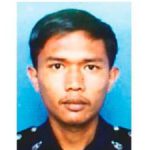
    PUTRAJAYA: The hearing of former police commando Azilah Hadri’s (pix) review application to set aside his conviction and death sentence for the murder of Mongolian Altantuya Shaariibuu in the Federal Court remains as scheduled on April 20.

    Former Prime Minister Datuk Seri Najib Abdul Razak’s application to intervene in Azilah’s review application is also fixed for hearing on the same day, according to the court document relating to the case sighted by Bernama.

    According to document, the Attorney-General’s Chambers were required to submit their respective affidavits in reply to the review application and to Najib’s intervener application by March 26, and Azilah must file his respective affidavit-in-reply by April 10 for both applications.

    Parties in the case were also required to submit their respective written submissions before April 6.

    During case management on Tuesday, lawyer J. Kuldeep Kumar for Azilah told media that his client is objecting to Najib intervening in his review application.

    Deputy public prosecutor Muhammad Azmi Mashud, who appeared for the prosecution and who also attended the case management, meanwhile had said his instruction was to object to Najib’s intervener application and also oppose to Azilah’s review application.

    Azilah who is currently on death row at Kajang Prison, filed his review application on Dec 5, last year together with his 32-paged statutory declaration which he claimed that the order to kill Altantuya had come from the former prime minister (Najib) who was deputy prime minister then.

    Azilah, 43, is seeking to set aside his conviction and death sentence imposed by the Federal Court on Jan 13, 2015 and an order for a retrial.

    In December, last year, lawyer Tan Sri Muhammad Shafee Abdullah told the media that his client, Najib had totally denied everything that had been alleged by Azilah.

    Azilah and Sirul Azhar Umar , 47, were convicted and sentenced to death by the Shah Alam High Court in 2009 for Altantuya’s murder at Mukim Bukit Raja in Shah Alam between 10 pm on Oct 19 and 1 am the following day in 2006.

    They were however discharged and acquitted by the Court of Appeal in 2013 which allowed their appeal to set aside their conviction and death sentence.

    In 2015, the Federal Court overturned the acquittal of the two police commandos and restored the High Court decision to find them guilty for the offence. — Bernama

    Azilah’s review application hearing remains on April 20
    Read More
    https://www.thesundaily.my/local/azilah-s-review-application-hearing-remains-on-april-20-KC2163972

    Views: 0

  • California AG drops challenge to T-Mobile-Sprint merger

    California AG drops challenge to T-Mobile-Sprint merger

    California’s attorney general said Wednesday that the state will not appeal a judge’s decision approving T-Mobile’s $26.5 billion purchase of Sprint.

    Read More

    Views: 0

  • Coder charged in massive CIA leak portrayed as vindictive

    Coder charged in massive CIA leak portrayed as vindictive

    A software engineer on trial for the largest leak of classified information in CIA history was “prepared to do anything” to betray the agency, federal prosecutors said Monday as a defense attorney argued the man had been scapegoated for a breach that exposed secret cyberweapons and spying techniques.

    Read More

    Views: 0

  • Use Caution With Do Not Resuscitate (DNR) in Living Wills

    [ad_1]

    All people including lawyers need to use caution with Living Wills and the Do Not Resuscitate (DNR) clause. Our relative who was an Emergency Medical Technician (EMT) for 17 years said he would not sign a DNR because he thought if he did that it would allow physicians to cause his death. We respected his decision but could not believe that physicians who mainly preserve life would be anxious to end life. However, it turns out he was correct, a Do Not Resuscitate (DNR) document does give a nursing home or a physician a green light to determine when or if a person can get medical care to preserve life.

    When you are signing paper work to place your loved one in a nursing home they will tell you how humane a Do Not Resuscitate (DNR) clause is, not requiring Cardiopulmonary Resuscitation (CPR) and/or a defibrillator which can break your loves one’s ribs. However, they do not inform you how bad it is for your loved one if they lose their mental or physical faculties unable to communicate their wishes for medical care and uncaring people determine the DNR means that they do not want medical care to extend their lives. Although my wife had a power of attorney requesting medical care for her Father, the Nursing Home staff just ignored us and our attempt to preserve the life of our family member.

    It turns out they had our relative sign a DNR while in a mental fog of an infection. The physician made a misdiagnosis claiming this patient’s daughter (my wife) was mentally ill for trying to honor her Father’s last wishes. She could not adequately communicate with her Father so she had reservations about sanctioning an amputation of his leg without his consent which I thought was prudent. This physician had never even met or talked to my wife and had no psychiatric credentials we are aware of. But when a physician makes a notation in a medical file it has powerful weight with a Court even if the information is false. So the nursing home staff took the physicians view declaring my wife crazy for trying to preserve the life of her Father thus over ruling her rights as a power of attorney and were going to legally expunge the life of her Father who wanted to live.

    Thus, a DNR in some circumstances can be more powerful than a power of attorney. I do not believe we are the only victims of this abuse of a DNR clause that some misguided people use to prematurely extinguish the value of human life. The common practice with the fervent sales pitch to get family members to sign a DNR out of humanity may be valid to a certain extent, but it can also be abused by people who believe they have the right to determine when a person dies.

    Including a clause or adding a hand written notation that the DNR does not give any party the right to deny medical care to your loved one is advisable. A DNR has the ability to convert a physician or nursing home staff into a psychopath and you should have reservations about signing such a document.

    [ad_2]

    Source by Dale Adams

    Views: 0

  • Why Do You Need an Attorney for Marital Arrangements and Settlements?

    [ad_1]

    It is very unfortunate, when you are on the verge to sign a divorce agreement. But in spite of the emotional breakdown, you have to be caution before signing any agreement of settlement framed by the attorney of your spouse. If you do not agree with the settlements mentioned in the drafts, do not sign, rather look forward to hire a prolific divorce lawyer who is famous in handling most critical divorce cases.

    What are the qualities your attorney must have?

    Before hiring a divorce attorney to defend you for the case make sure that the legal professional and qualified enough to handle such critical case. Hence, it is recommended to hire a lawyer from a known countenance.

    If you have to appoint the legal practitioner without any reference, go through the website of the expert. Check the testimonials and the area of expertise. Moreover, check the reviews of the lawyer and how many successful marital agreement and settlement cases he/she has handled? Checking the license of the lawyer is also suggested.

    If you want to stay confident about all the mentioned pointers, consult a reputed attorney or a well-known solicitor firm that has the strong background of defending marital separation and settlement cases.

    Hire an attorney to write the agreement

    Often the departing married couples decide their own terms and depending on that they try to write their own agreements. But it is strongly recommended that even for a mutual agreement settlement you should afford a lawyer. These legal masterminds have the expertise to draft the lines with the legal twist that covers everything that have been decided among the divorcing couples. Often the self-drafted papers look vague and unclear. Moreover, the opponent can take advantage of the unclear data and blackmail the other spouse in future. This can also call for another case. Hence, to stay away from all such anticipated debaucheries, it is better to hire a lawyer and get him/her write the agreement.

    Handling the agreement of child custody

    The children of the separating parents have to go through several traumas and troublesome time. Therefore, lawyers of both the parties and the court are compassionate about such separation cases. Usually, the children are handed over to that parent who is more responsible and economically stable to take care of the kids. Some unfortunate cases have also witnessed where both the parents are not interested to take their children. During this critical situation, the court takes care of the kids and they are handed over to homes. But if your case is different and you want to fight for your kids, you need to hire an experienced lawyer that can ensure that the children will be will you.

    Therefore, before signing the agreement of the custody let your Attorney read the drafts thoroughly so that you may not be misguided or cheated by the opponent about the custody of your kids.

    [ad_2]

    Source by Garfield Langmuir Logan

    Views: 0