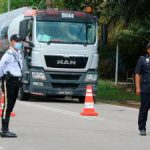
The COVID-19 pandemic is having a devastating impact across the world. Efforts to contain the coronavirus are vital to the
health of the world’s population, but they are also exposing children to increased risk of violence – including maltreatment,
gender-based violence and sexual exploitation.
As leaders of organisations committed to ending violence against children, we come together in solidarity to share our deep
concern, call for action and pledge our support to protect children from violence and reduce the impact of COVID-19 on
children in every country and community.
A third of the global population is on COVID-19 lockdown, and school closures have impacted more than 1.5 billion children.
Movement restrictions, loss of income, isolation, overcrowding and high levels of stress and anxiety are increasing the
likelihood that children experience and observe physical, psychological and sexual abuse at home – particularly those
children already living in violent or dysfunctional family situations. And while online communities have become central to
maintain many children’s learning, support and play, it is also increasing their exposure to cyberbullying, risky online behavior
and sexual exploitation.
The situation is aggravated by children’s lack of access to schoolfriends, teachers, social workers and the safe space and
services that schools provide. The most vulnerable children – including refugees, migrants, and children who are internally
displaced, deprived of liberty, living without parental care, living on the street and in urban slums, with disabilities, and living
in conflict-affected areas – are a particular concern. For many, growing economic vulnerability will increase the threat of child
labour, child marriage and child trafficking.
We must act now. Together, we call on governments, the international community and leaders in every sector to urgently
respond with a united effort to protect children from the heightened risk of violence, exploitation and abuse as part of the
broader response to COVID-19.
Governments have a central role to play. They must ensure that COVID-19 prevention and response plans integrate age
appropriate and gender sensitive measures to protect all children from violence, neglect and abuse. Child protection services
and workers must be designated as essential and resourced accordingly.
Working with and supporting governments, our collective response must include: maintaining essential health and social
welfare services, including mental health and psychosocial support; providing child protection case management and
emergency alternative care arrangements; ensuring social protection for the most vulnerable children and households;
continuing care and protection for children in institutions; and communicating with and engaging parents, caregivers and
children themselves with evidence-based information and advice. National helplines, school counsellors and other child-friendly
reporting mechanisms enable children in distress to reach out for help, and must be adapted to the challenges of COVID-19.
Given the heightened risks of online harms, technology companies and telecoms providers must do everything they can
to keep children safe online. This includes providing access to cost-free child helplines, age-appropriate services and safe
e-education platforms – and using their platforms to share child online safety advice. They must also do more to detect and
stop harmful activity against children online, including grooming and the creation and distribution of child sexual abuse
images and videos.
As global organisations working to end violence against children, we will continue to advocate for and invest in effective child
protection solutions. We will collectively develop and share technical resources and guidance for policymakers, practitioners,
parents, caregivers and children themselves. And we will support the courageous health, child protection and humanitarian
professionals working around the clock to keep children safe during these unprecedented times.
In recent years, the global community has made significant gains in protecting children from violence. We must not allow those
gains to be lost during the current turmoil. We must do all we can to keep children safe now. And we must plan ahead together,
so that once the immediate health crisis is over, we can get back on track towards the goal of ending all forms of violence,
abuse and neglect of children
Read More
https://www.who.int/news-room/detail/08-04-2020-joint-leader-s-statement—violence-against-children-a-hidden-crisis-of-the-covid-19-pandemic
Originally broadcast live on 06 April 2020, the daily press briefing on coronavirus COVID-19, direct from WHO Headquarters, Geneva Switzerland with Dr Tedros WHO Director-General, Dr Micheal Ryan, Executive Director of the Health Emergencies Programme, and Dr Maria Van Kerkhove, Technical lead, WHO Health Emergencies Programme with special guests Lady Gaga and Hugh Evans, CEO and Co-founder of Global Citizen.
Transcript:
Speaker key:
TJ Tarik Jasarevic
TAG Dr Tedros Adhanom Ghebreyesus
LG Lady Gaga
HE Hugh Evans
MR Dr Michael Ryan JA Jamie
MK Dr Maria Van Kerkhove KA Kai
KT Kate
IN Innocent
YA Yang
00:00:19
TJ Good evening to everyone from Geneva and WHO headquarters. Welcome to the regular press conference on COVID-19. Journalists who are online can ask their questions by clicking raise hand if you are
on Zoom. Today we have a special guest but I will let Dr Tedros do his opening remarks and introduce them. Before I give the floor to Dr Tedros, just to remind you, we will also be sending you some news from other
WHO offices around the world with the audio file from this press briefing a little bit later. I give the floor immediately to Dr Tedros.
00:01:07
TAG Good morning, good afternoon and good evening. The COVID-19 pandemic continues to take a heavy toll on families, communities and nations the world over but it’s also giving rise to incredible acts of generosity,
solidarity and co-operation. We have said consistently that we’re all in this together and we can only succeed together. We need an all- of-society approach with everyone playing their part. That includes people in the entertainment
industry.
Today I’m very delighted to be joined by one of the biggest names in entertainment in the world, Lady Gaga, and my friend Hugh Evans, the founder and CEO of Global Citizen.
WHO has been working with Global Citizen for several weeks on the Together At Home concert series with artists like Chris Martin and John Legend giving free online performances.
Now we’re working with Lady Gaga and Global Citizen to take this concept and make it even bigger through the One World Together At Home virtual global special on Saturday 18th April. It’s now my great pleasure to invite
Lady Gaga and Hugh Evans to say more about this very special event, One World.
00:03:10
LG Thank you very much, Dr Tedros. Good morning, good afternoon and good evening to everyone who’s listening and watching. I would like to thank the World Health Organization and the
United Nations as well as Global Citizen; thank you very much, Dr Tedros and Hugh Evans, for all of your leadership in this fight against COVID-19 and thank you very much to the World Health Organization for asking me to collaborate
with you on this special.
We are also very grateful to all of the healthcare professionals across the country and around the world who are on the front lines during COVID-19. This global pandemic is a catastrophe. I’m so thankful to them and I’m also
praying for those who are sick. It’s been a pleasure to partner with Global Citizen and we’ve been working all together behind the scenes to raise money for the World Health Organization.
I would also like to send my prayers as well to people that are losing their jobs and are having a hard time feeding themselves and their children. We are raising money for the World Health
Organization’s COVID-19 Solidarity Response Fund and seven days ago we held a call with more than 68 corporate leaders from some of the world’s biggest and most generous companies and I asked them to join my corporate kindness
list as there have been many corporations and philanthropists that have been very, very generous during this time.
00:04:38
Since then we have also been calling on philanthropists around the world as well and tech companies included. I’d like to reiterate our deep gratitude to the medical community. My heart is very, very aching and warm for those
who are ER doctors as well as nurses who are sleeping in cars to make sure they don’t infect their families or their patients. What you’re doing is putting yourselves in harm’s way to help the world
and we all salute you and you are a triumph truly.
I am proud to say that over the past seven days we’ve raised a total of $35 million for the Solidarity Fund. This money will [inaudible] essential PPE, supplies and testing kits around the world and will help improve lab capacity
to rapidly process tests. It will also [inaudible] research development. It is so important to think globally and to support the World Health Organization to curb the pandemic and prevent future outbreaks.
I know Dr Tedros is particularly concerned about Africa and [inaudible]. We also need to act globally by supporting local charities and initiatives so that the front-line health workers in most immediate need have the resources they need
to survive during this time. It has been an honour to help with this huge broadcast event, which will take place on April 18th, where we need to tell the stories of and celebrate the front-line community, healthcare workers and their acts of kindness.
We will be on different networks, many networks actually and I want to [inaudible] about what we’re going to be doing. What’s very important is that two things happen for all of us; that we celebrate and we highlight the singular, kind global community
that is arising right now. Two, we want to highlight the gravity of this historically unprecedented cultural movement and, three, we want to celebrate and encourage the power of the human spirit.
00:06:47
I would like to, on behalf of the World Health Organization and Global Citizen, thank Dr Tedros as well as everyone that has donated so far. We are going to continue fundraising but I would like to also let you know that
this broadcast special is not actually a fundraiser. We all wanted to raise the money before we went on air so when we do air live on April 18th put your wallets away, put your credit cards away, anything
away that you need to and just sit back and enjoy the show that you all very much deserve.
I’d like to pass this now to Hugh Evans, who’s been a wonderful partner of mine. Hugh, thank you so much and thank you, Dr Tedros.
HE Good morning, good afternoon, good evening and thank you, Dr Tedros and thank you, Lady Gaga. Your Excellencies, ladies and gentlemen; Lady Gaga, Dr Tedros,
you’ve both demonstrated extraordinary leadership at an unprecedented moment when our society is being challenged like never before and we are so thankful for your leadership. I’d like to echo Lady Gaga’s sentiment and commend the incredible acts
of bravery demonstrated by the front-line community health workers around the world and I hope that we as a shared humanity emerge from this moment forever grateful for the work of doctors, nurses, teachers, grocery store workers and all of those who are
the backbone of our communities.
Global health is at the very core of the global citizen mission and we must ensure that the world’s poorest and most marginalised people have access to resources to cope with and tackle this health crisis. Through One
World: Together At Home on April 18th we’ll be calling on philanthropists, corporations and governments to fund critical global COVID-19 response efforts including distribution of resources and PPE to critical front-line healthcare
workers.
00:09:09
In our partnership with the WHO and United Nations Global Citizen is committed to driving action to help ensure our global health systems are strong enough to stop a future pandemic before it happens. April 18th is going to be a moment of global unity
connecting the world through a historic global broadcast. We are bringing together the greatest artists in the world under the passionate and extremely talented curation of Lady Gaga.
In alphabetical order some of the artists we’ll be announcing today include Alanis Morissette, Andrea Bocelli, Billie Eilish, Billy Joe Armstrong of Green Day, Burna Boy, Chris Martin, Sir David Beckham, Eddie Vedder,
Sir Elton John, Finneas, Idris and Sabrina Elba, J Balvin, John Legend, Kacey Musgraves, Keith Urban, Kerry Washington, Lang Lang, Lizzo, Maluma, Sir Paul McCartney, Priyanka Chopra Jonas, Shah Rukh Khan, Stevie Wonder and many more to be announced over the coming weeks from all corners of the globe under the passionate and extremely talented curation of Lady Gaga.
We’re grateful to all of you for participating and supporting this critical effort. One World Together At Home will be broadcast live on Saturday April 18th 2020 at 5:00pm PDT, 8:00pm EDT and 12:00am BST, airing on ABC, NBC, Viacom and CBS networks,
IHeartMedia, and Bell media networks and platforms in Canada. Internationally BBC1 will run the programme on Sunday April 19th and additional international broadcasters include BN Media Group, Multi-Choice Group and RTE in Ireland.
00:11:43
The digital broadcast will celebrate and support brave community health workers who are doing life-saving work on the front line and we’ve all seen the limitations of world leaders around this world to step up and face this extraordinary challenge
and we want to do our best to support the essential work of the World Health Organization, driving action and raising critical funds. Thank you again, Dr Tedros, and thank you, Lady Gaga, for your leadership.
Thank you all.
TJ Thank you very much to our guests for their remarks. Dr Tedros, I guess you would like to thank them too.
TAG Once again I would like to thank Lady Gaga and Hugh Evans for their partnership. We had a call last week and I was so amazed by the energy and passion of Lady Gaga. It’s incredible commitment to humanity and that’s
when I said, I think what she has planned can happen. It’s bringing the world together to improve awareness and to mobilise resources to fight the pandemic so I thank her for her incredible passion and commitment and leadership and
also to my friend, Hugh Evans, for connecting all the dots and for his leadership.
We all look forward to joining you for the One World: Together At Home concert on 18th April. As the pandemic continues we recognise that individuals and governments want to do everything they can to protect themselves and others and so do we.
We understand that some countries have recommended or are considering the use of both medical and non-medical masks in the general population to prevent the spread of COVID-19.
00:14:21
First and foremost medical masks must be prioritised for health workers on the front lines of the response. We know medical masks can help to protect health workers but they’re in short supply globally. We’re concerned that the mass
use of medical masks by the general population could exacerbate the shortage of these specialised masks for the people who need them most. In some places these shortages are putting health workers in real danger.
In healthcare facilities WHO continues to recommend the use of medical masks, respirators and other personal protective equipment for health workers. In the community we recommend the use of medical masks by people who are sick and those who
are caring for a sick person at home.
WHO has been evaluating the use of medical and non-medical masks for COVID-19 more widely. Today WHO is issuing guidance and criteria to support countries in making that decision. For example countries could consider using masks in communities where other measures such as cleaning hands and physical distancing are harder to achieve because of lack of water or cramped living conditions.
If masks are worn they must be used safely and properly. WHO has guidance on how to put on, take off and dispose of masks. What’s clear is that there is limited research in this area. We encourage countries that are considering the use
of masks for the general population to study their effectiveness so we can all learn. Most importantly masks should only ever be used as part of a comprehensive package of interventions. There is no black or white answer and no silver bullet.
Masks alone cannot stop the pandemic. Countries must continue to find, test, isolate and treat every case and trace every contact. Mask or no mask, there are proven things all of us can do to protect ourselves and others.
00:17:13
Keep your distance, clean your hands, cough or sneeze into your elbow and avoid touching your face. Less than 100 days since WHO was notified about the new coronavirus research has accelerated at incredible speed. The viral genome
was mapped in early January and shared globally, which enabled tests to be developed and vaccine research to start. More than 70 countries have joined WHO’s Solidarity Trial to accelerate the search for an effective treatment and about
20 institutions and companies are racing to develop a vaccine.
WHO is committed to ensuring that as medicines and vaccines are developed they’re shared equitably with all countries and people. I want to thank the Medicines Patent Pool and Unitaid for the initiative they announced last
Friday to include medicines and diagnostics for COVID-19 in their licensing pool.
I also want to thank the President of Costa Rica, President Carlos Alvadaro, and the Health Minister, Daniel Salas, for their proposal to create a pool of rights to tests, medicines and vaccines with free access or licensing on reasonable and affordable
terms for all countries. Muchas gracias, Mr President. I support this proposal and we’re working with Costa Rica to finalise the details.
00:19:09
Poorer countries and fragile economies stand to face the biggest shock from this pandemic and leaving anyone unprotected will only prolong the health crisis and harm economies more. I call
on all countries, companies and research institutions to support open data, open science and open collaboration so that all people can enjoy the benefits of science and research.
Finally we’re nearing the end of the Ebola outbreak in the Democratic Republic of the Congo. This is one piece of good news. If there are no more cases the Government of the Democratic Republic of Congo could declare the outbreak over as early
as this Sunday. We’re not there yet and we remain in full response mode. We’re continuing to investigate alerts and to test samples.
This would not have been possible without the incredible health workers who have put themselves at risk for more than 18 months to stop this outbreak, just as health workers are putting themselves in danger to save lives from COVID-19. Health
workers in DRC faced the double threat of fighting a deadly virus in one of the world’s most dangerous and unstable regions, exposing themselves to Ebola and bullets.
Tomorrow, as you know, is WHO’s birthday, a day we celebrate each year as World Health Day. This year we’re paying tribute to the incredible contribution of all health workers, especially nurses and midwives. Nurses and midwives are the backbone of
every health system. They’re there from the first moments of life to the last. Tomorrow we’re publishing our first report on the state of the world’s nursing which highlights gaps and makes recommendations for all countries.
00:22:00
One of the lessons I hope the world learns from COVID-19 is that we must invest in health workers, not only to protect lives but also to protect livelihoods. I thank you.
TJ Thank you very much, Dr Tedros. Also, as always, we have Dr Mike Ryan and Dr Maria Van Kerkhove, who will be answering questions. We will now open the floor. I will go to one question
that I received by email this morning and I promised to answer; that’s Ankit Kumar from India Today. Ankit is asking; we have recently seen a spike in cases caused through religious gatherings in India, in fact almost a third of new cases
were linked to one gathering in India. We have also seen incidents of violence against health workers due to fear and misinformation. Is WHO concerned with these developments, what is WHO’s message to religious and community leaders and their
followers?
MR First and foremost the idea of violence against health workers is driven by fear and it’s driven by misunderstanding but it’s really unacceptable. We ask everyone and every community to see our health workers
as our heroes and to support them in every way we can.
With regard to gatherings of any type, be they religious or be they for other purposes, there are always risks associated with such gatherings in the midst of a major epidemic. WHO has issued guidance on that. Many of these gatherings
are now postponed or cancelled. We’ve been working very, very closely with religious and faith-based organisations all over the world including groups from the Islamic tradition, Christian
traditions and others and continue to work through faith-based organisations to communicate using our Epiwin platform.
00:24:21
We’re also continuing to develop guidance specifically for the holy month of Ramadan and are working through our Eastern Mediterranean regional office to be able to advise governments and religious institutions on how best to manage
the risks associated with such holy events.
But it’s very important again; having COVID-19 is not anybody’s fault. Every case is a victim and every case needs to be treated with sensitivity, as the health workers who treat them so it’s very important that we’re not profiling COVID-19
along racial, along religious, along ethnic lines. This is not helpful.
TJ Thank you very much. This was a question from Ankit Kumar from India Today. Now we will go to journalists online. We will start with Jamie from Associated Press. Jamie, can you hear us?
JA Hi, yes. Can you hear me? TJ Yes. Please go ahead.
JA Great, thank you very much. I wanted to ask you about… Over the weekend Dr Anthony Fauci mentioned that – if I understood it correctly – as much as 50% of transmission could be asymptomatic. Just aligned
with that, if you could give us a little bit more about what you’re thinking about the fact that some countries have said that this outbreak is more infectious than influenza. The CDC is saying that it’s up
to three times more infectious than influenza so what do you have to say about that? Thanks.
00:26:13
MK I’ll start and then perhaps Mike or DG would like to supplement. The modes of transmission and the way in which this virus is transmitted are of significant interest to all of us. What we are doing is working
with member states, we’re working with everyone that’s affected by this, looking through the research and trying to understand when most transmission is happening, when any transmission is happening.
What we know from reports, what we know from published literature is that the predominant way in which transmission is occurring is amongst symptomatic individuals and these are people that can be very early on in symptoms, even when they start
to feel a little bit unwell. This is supported by some data that attempts to catch a virus from individuals who are symptomatic.
We also know that it’s possible that people can transmit in the few days before they become symptomatic or in their pre-symptomatic phase. There have been some studies that have come out and we learned about this when we were on mission
in China back in January or early February, that there are individuals that can shed virus one to three days before they develop symptoms.
However it’s very important to note that even if you are pre-symptomatic or even if you don’t have any recognised symptoms you still have to transmit through droplets, you still have to have these infectious particles that come out
of your nose and your mouth. So while we know that that is possible we do not believe that it’s a major driver of transmission.
00:27:42
We’ve also seen modelling estimates that suggest that there’re large numbers of unrecognised transmission and I used unrecognised on purpose because I’m not saying asymptomatic. I’m saying that we may be missing people who are out there who are infected
but we’re missing them because of current surveillance strategies. That is certainly possible in many parts of the globe.
Whether or not those individuals are asymptomatic; we will have to wait until we see the results of serologic studies, which we hope we’ll be seeing in the coming days if not weeks.
So what we can say is that most people are transmitting this virus while they are symptomatic.
JA Hi, Jamie. Just in addition because I think – I would never in any way contradict my good friend, Tony Fauci, such an eminent man. There are many different estimations of what might represent asymptomatic
transmission or other infections in the community and we do know and everyone accepts that when the seroepidemiology studies do come online we will probably find more people who’ve been infected unknowingly; there’s no question of that.
The thing we need to address in all of this is very often the idea of severity versus infection and there is a huge association between the dose of exposure and the severity of infection. We see this in many other
infectious diseases so we also probably need to look at who is getting sick and very sick and is the dose and the type of exposure they’re getting different to those who may be exposed and seroconverted in the community.
00:29:26
So it’s not just a matter of looking at how many people in the community are infected but are there specific elements of exposure that cause individuals to have a higher dose of exposure or a specific route of exposure
that causes more severe infection? There is also that concept of infectious dose when we talk about the different types of transmission. If somebody is exposed to a high dose from another individual directly or from a surface that’s
heavily contaminated you can imagine the large dose.
In other circumstances individual particles or virus particles potentially floating through the air; it can be demonstrated that that may happen in certain circumstances, certainly in healthcare settings. But is that significant in
terms of driving infection, is that significant, does that produce an infectious dose that can successfully infect another individual?
These are all very important things that still need to be studied. Again we’re only a number of weeks into this. I think we need to have the seroepi studies. I think we need more information on what is the infectious dose and particularly
the relationship between the dose of exposure or infection and the severity of disease subsequently, which has been seen with many, many other diseases in the past including cholera, Ebola and others.
TJ Thank you very much, Mike and Maria. We will go now to our next question; that’s Kai Kupferschmidt. Kai, can you hear us?
00:31:01
KA Yes, Tarik. Thanks a lot for taking my question. I wanted to ask about the global push to try and find a pre-exposure prophylaxis or a post-exposure prophylaxis. I understand there’re
several trials going on, most of them with chloroquine or hydroxychloroquine. I was just wondering whether you can speak a little bit to what role this could potentially play.
Of course also there’re a lot of smaller studies going on. Is there any way to make sure that they all lead to results that can be proved in the end?
MR Maria can give you more detail but certainly one of the Solidarity trials – I think Solidarity 3 or 4 – we have one of the trials under design which will be a multi-centre study which will look at prophylaxis in healthcare workers to see whether there’s evidence that giving lower doses of drugs like chloroquine or hydroxychloroquine to healthcare workers would reduce their risk of becoming infected in a healthcare environment.
Those studies are certainly underway and again there are a number of those studies underway in smaller studies around the world but again as WHO we’re trying to bring together a larger set of collaborative studies that will give
us the answers we need.
In terms of post-exposure prophylaxis I don’t believe we have at the moment studies planned but Maria can speak to that but there is certainly evidence for the use of – not proven evidence of effectiveness but there are a number
of studies underway and trials underway that use hyperimmune globulin in the treatment of disease; in other words they use that purified plasma of recovered individuals to give an antibody boost to people who are
suffering the disease.
00:32:49
Similar approaches have been used in post-exposure prophylaxis for other diseases but Maria may be aware of studies underway in that area.
MK Only to add that, as you mentioned, there are a number of smaller studies that are happening globally and across a large number of countries. We have teams through our science division and through GOARN,
through the Global Outbreak Alert Network, who are pulling together available literature on a number of topics, one of which is looking at different types of therapeutics and drugs.
The idea is until we can have a study that pulls together enough of a sample size to get these answers to these questions we’re trying to evaluate every piece of evidence that is published so that we can look at the way in
which these studies were done, we can look at the strengths, we can look at the limitations so that can help guide us closer towards an effective treatment for COVID-19.
TJ Thank you very much. The next question is from BFM Radio. Is is Kate who is with us?
KT Yes, hi. Good evening or good morning. I’m from BFM Radio Malaysia. My question is, many countries around the world have imposed lock-downs or some sort of restrictions on movement. I was wondering
what WHO’s guidance would be; what’s the sweet spot, the kind of data that governments need to consider before lifting or relaxing some of these lock- downs? Thank you very much.
00:34:29
MR Thank you. It is a difficulty for governments right now because the lock-downs in many situations are proving effective in dampening the flames of the epidemic in those countries but those
lock-downs are also causing great economic hardship and everybody especially in the developing world needs to get to a more sustainable way of managing this epidemic and controlling COVID-19 without continuing to damage economic and social life.
The transition strategy out of lock-down requires a calibrated, step-wise approach. It would be probably very inadvisable just to lift a complete lock-down, all of the measures because lock-downs are a general term that
include closure of schools, closure of churches, stay-at- home orders, closure of workplaces. It’s a mixture of different things and I think each government needs to break out, what does our lock-down actually constitute, what are the elements
of our lock-down, where is that happening in the country, do we now understand the epidemiology of the disease in each area in which we have an element of lock-down or shut- down.
Then to chart the path out, you have to build strong public health capacity to take over from the lock-down. In other words the lock-down is pushing the disease down by putting people back in their homes, by separating communities. Once you raise
the lock-down you have to have an alternative method to suppress the infection. The way to do that is active case finding, testing, isolation of cases, tracking of contacts, quarantining of contacts and strong community education and
participation and ownership around normal physical distancing, hygiene and giving communities the power to control infection by in effect managing their own physical distance, managing their own capacities to support the response.
00:36:32
In that situation, if you’ve strong public health capacity, if you’ve got a community that’s mobilised and empowered and if you’ve strengthened your health system then you’re potentially in a position to start unlocking or unwinding the lock-down.
The specific parameters you need to be looking at are on two sides.
One is, it would be very inadvisable to lock down [sic] if the number of cases coming through the hospital is already at a level where your occupancy of beds is nearly at 100%. You need to be in a position where
you now have free beds in your system so that you’re managing and coping with the caseload and that means you have some absorption capacity left.
You need to look at things like the doubling rate; how many days does it take for the number of cases to double? You need to look at positivity rates; what proportion of all samples that we test are positive? You’ll see in
somewhere like Korea two to 6% of the samples they test are positive. Last week in New York 37% of tested samples were positive so you need to carefully look at what proportion of people you test are positive.
00:37:45
You need to look at the number of contacts that are generated per case and it goes on and on and WHO will be issuing guidance to countries that is a much more specific around the parameters they should be looking at. There are no absolutes here, there
are no answers, there are no numbers that say if this number is this then you do that. That doesn’t exist but what we can do is offer countries very specific measurements that they need to look at to chart the path out of lock-down.
That step-wise approach of unlocking somewhat and then waiting to see; I think you need to say, we will stop doing this element of the shut-down and then we will wait and we will look at the data and if that works we go to the next
stage and the next stage. So a careful, calibrated, step-wise exit from lock-down with putting in place public health capacities, putting in place community capacity, building the capacity of the health system to cope should the disease bounce back up; that’s the safe path out of lock-down.
We want to achieve it as quickly as possible and we want to avoid many countries going into that circumstance and we still have many countries around the world who are not in a locked- down situation. In fact their epidemiology would suggest
they can avoid the worst of this and we need to support them to avoid them going into that situation.
The most damaging lock-downs are in many developing countries where people – as the DG has said many times – can live from hand to mouth, not from pay cheque to pay cheque but from day to day and we have to find adaptive solutions
around lock-down and around disease control in vulnerable periurban populations living in poverty, in poor rural communities. We have to find alternative, adapted ways to manage lock-downs or slow-downs or shut-downs in
those situations.
00:39:41
TJ Thank you very much. This was Kate from BFM Radio in Malaysia. Now we will go to Nigeria to Natural Star and it’s Innocent. Innocent, can you hear us?
IN Thank you. Can you hear me?
TJ Not very well but we will try. Please go ahead.
IN Okay, thank you for taking my questions. I have two questions to ask. One; how will WHO assess African countries on what they’ve done concerning the lock-down and management of COVID-19?
Then the second one; there’s news going around that vaccines are to be tested on Africans when they’re developed. How true is that and is there a window that’s in the nearer future when a vaccine will be developed for COVID-19? Thank you.
Hello?
TJ Yes, we are just trying to make sure that we understood the question but we will try. MR I think this is Nigeria. Is it?
TJ Yes.
00:41:08
MR Maria may answer the question around vaccine development. With regard to our general assessment on lock-down – and the Director-General may wish to comment on this because he’s been speaking with many leaders in Africa
and, I believe, spoke with the whole of the African Union leadership and countries late last week so therefore is in a much better position than me to speak about that.
We would characterise so far, Africa’s actually doing well in this response thus far. Countries have essential capacities for testing, many countries are taking strong action and want to really focus on finding cases and doing contact tracing and trying to stop this disease becoming much more extensive given the fact that health systems are not as strong in many countries.
They need support in that though, they need support in testing, they need support with protective gear and they need to be given the resources to be able to mount those types of responses so I would characterise that Africa has not suffered the worst
of this pandemic so far. The worst of it can be avoided with very, very swift action to support those countries in Africa who really do want to take a comprehensive approach to this disease.
With the many vulnerable people including refugees and migrants who live in those countries it is our responsibility to provide that support but, DG, you may wish to speak about your interactions with the African
Union countries.
00:42:46
MK I’ll answer the question around vaccines. What we can say is that there are a number of vaccines that are in development and vaccines will be tested through clinical trials with all ethical considerations
in place in whichever populations are under study with informed consent, with open and transparent communication. This is of the utmost importance, that not only do we have strong, robust scientific evidence
but we ensure that all of the studies that are done are done with appropriate and the highest level of ethical considerations.
One thing on the first question around Africa is that there are a number of countries in Africa right now which have very few cases and Mike has alluded to this in his earlier response.
Some only have imported cases and there is an opportunity here, this window of opportunity that the DG has spoken about exists in many countries still. There is an opportunity to prevent the worst from happening
in a number of countries across Africa and across countries that are still seeing their first case; in some island countries.
We need to support those governments, those countries, all of the people in those areas to prevent the worst from happening, to prevent these individual cases from becoming clusters, these clusters from becoming community transmission. I think that’s
where we need to put a lot of emphasis and support so that we can prevent countries from reaching a point where they need to put in these very restrictive movement restrictions.
TAG Thank you. Thank you for that question, my brother from Nigeria. On the situation, as Mike said, of course when you see the number of cases the African continent has the lowest number of cases so far but that doesn’t mean that
the situation will not deteriorate. It may.
00:45:06
So Africa should do everything to prevent this situation from getting worse and that’s why African leaders are doing their best. I had a chance to participate in a meeting, a Leaders’ Coalition which was arranged or invited by the current Chairperson
of the African Union, the President of South Africa, President Ramaphoza and many leaders from all corners of the continent have actually participated.
The main agenda is to have a continental strategy and also make sure that that continental strategy helps the national strategy but in addition to a coalition of political leaders or the heads of state and government they have also agreed to have a coalition of business leaders. Business leaders in Africa are also getting together because Africa will need resources and one of the major problems that was identified during the discussion
was especially shortage of equipment starting from medical equipment, PPE and test kits and so on.
The leaders have agreed to look for concrete solutions to address the problem and they also believe that considering the number of cases we have in the continent testing cases, tracing contacts and isolating them, meaning using the comprehensive approach,
will actually help. They believe that lock-downs alone may not help or the physical distancing alone cannot help and they have agreed to do everything to follow the comprehensive approach.
From WHO’s side we have been supporting and we increased, improved the testing capacity in Africa significantly in the past two months and many countries in Africa have now testing capability although we may have a shortage of test kits but
we’re working on that too and we’re finding different ways of addressing the gap.
00:48:06
But we will support the African Union, we will support the Africa CDC and also we will continue working through our WHO regional office in Congo Brazzaville and continue to support and fight the pandemic together.
Then on the vaccines issue there was, I think, a comment last week from a couple of
scientists who said the testing ground for the new vaccines will be Africa. To be honest, I was so appalled and it was a time when I said, when we needed solidarity these kind of racist remarks actually would not help, it goes against the solidarity.
Africa cannot and will not be a testing ground for any vaccine. We will follow all the rules to test any vaccine or therapeutics all over the world using exactly the same rules. Whether it’s
in Europe, Africa or wherever we will use the same protocol and if there is a need to be tested elsewhere to treat human beings the same way, equally.
The hangover from a colonial mentality has to stop — and WHO will not allow this to happen. It was a disgrace actually and appalling to hear during the 21st century from scientists that kind of remark and we condemn
this in the strongest terms possible but we assure you that this will not happen in Africa and will not happen elsewhere, in any country. Proper protocols will be followed and human beings will be treated as human
beings because we’re all human beings.
00:50:37
Then after saying this the vaccine development; we’re addressing two issues and we will be announcing as soon as possible, hopefully during this week, a big initiative to accelerate the research and development and production of vaccines and also
design mechanisms for equitable distribution of the vaccines.
While we’re looking for vaccines, unless we break the barriers to equitable distribution of the products, whether it’s vaccines or therapeutics, we will have a problem, so we need to address the problem ahead of time, we need to address the problem
of access or challenges to access ahead of time.
That’s why we will put together a mechanism and we will appoint senior people from the North and South that will work out the details on how they can accelerate production but at the same time how they can ensure equitable distribution. Solidarity
is very important here. When a vaccine or a medicine is ready we have to be able to deliver it all over the world.
There should not be a divide between the haves and the have-nots.
If we say solidarity, solidarity should be in its full form and I hope each and every individual, each and every human being will go for that kind of solidarity. I thank you.
TJ Thank you, Dr Tedros. We’ll take a couple more questions. We go to Yang from Xinhua news agency. Yang, can you hear us?
00:52:58
YA Can I hear you?
TJ Yes, we can hear you. Please go ahead.
YA As World Health Day is approaching what do you have to say to the front-line medical workers in China and around the world in the global anti-virus efforts? This question is
for Dr Tedros. Thank you.
TJ If we understood well, the question is what is the message to health workers in China and around the world. Maybe you can repeat the question one more time, please.
YA Okay. As World Health Day is approaching what would you say and what message do you want to deliver to the front-line medical workers in China and around the world in the global anti-virus effort?
TAG I think I have said it earlier; as you know, this is the year of the nurse and the midwife, 2020. We were ready to celebrate it in a big way and it was supposed to be the main event in our
Assembly in mid-May. Unfortunately we’re in this situation but we will be launching a report tomorrow which is the first of its kind. It’s a report on the state of nursing. We will launch it tomorrow during the World Health
Day.
00:55:01
But while launching that report, although it’s about nursing, we will celebrate all health workers, midwives, pharmacists, doctors, you name it. I think the world is now seeing the importance and the central role that health workers play. People,
when they’re asked, of course, to choose they would say health first because it’s only when you’re healthy that you can aspire to anything, whether it’s wealth or fame or anything. It doesn’t matter if you’re not healthy.
If you’re not healthy the first thing you ask for is to get back your health and our health workers are making sure that happens and they’re central and very important for any individual. So not only during COVID but during other times too health
professionals are very important because they are safeguarding that very important aspect of life — that’s health.
So we have to celebrate them every day. Of course during COVID we can see to what extent they’re sacrificing. We have lost many of them. They’re dying while saving lives so my message first is to the public at large; that each and every individual
should recognise, whether it’s during normal times or pandemics like now, the role of health professionals and help them, protect them, really appreciate and respect what they are doing.
To the health workers, although especially during this COVID pandemic you’re working in a difficult situation you should know that your work is the most blessed one, your work is something special to the extent of losing your life
while helping others to live. We respect you and appreciate you for that and we also believe in you and that you will do everything to control this pandemic.
00:58:11
But you should know that you have – and the world understands – the most important job. We can see the humility which is coming from some leaders because of this pandemic. I know they’re seeing, starting from their own lives, the whole world through
a different prism and they will also see your role.
But the most important is not the recognition from the public or from leaders but the internal commitment and passion you have and believing that you’re doing the most blessed thing and you have all our respect and appreciation and we believe in
you, that together we will finish this pandemic. All the respect and appreciation we have to you, the greatest respect and appreciation ever. Thank you.
TJ Thank you very much, Dr Tedros. I think this important message will be heard from everyone and we will conclude this press briefing with these important words from Dr Tedros. We will
have an audio file available in the minutes to come and we invite you for our next briefing on Wednesday. Thank you.
TAG [Inaudible] and see you on Wednesday – tomorrow actually for the launch. Yes, see you tomorrow.
01:00:18
Read More
https://www.who.int/news-room/detail/06-04-2020-virtual-press-conference-on-covid-19–06-april-2020
Coronavirus (COVID-19) is right here to show us a lesson; I hope we be taught. Nigeria’s healthcare is unhealthy. But as an alternative of fixing it our rulers have been busy flying up and down to profit from different nation’s productive well being system. With Coronavirus, actuality is upon us. No extra operating abroad for medical trip. Our rulers can’t journey to the United Kingdom, United States of America or India anymore for medical care. These nations are additionally hanging on their final breath, battling to outlive the COVID-19 pandemic.
In 2017, President Muhammadu Buhari spent 103 days in London receiving medical therapy for an undisclosed sickness, spending taxpayers’ cash as an alternative of investing within the nation’s healthcare. Thousands of Nigerians died in the identical interval from totally different sicknesses. More than 3,000 girls died of breast most cancers, greater than 2,000 girls died of cervical most cancers and greater than 1,500 males died of prostate most cancers, in line with World Health Organization (WHO) figures on annual most cancers mortality.
I had hoped that on his return to Nigeria, President Buhari would declare a state of emergency within the nation’s well being sector. Painfully, nothing of such occurred. Nigeria’s funds allocation to healthcare has remained lower than 5% of the whole funds for the previous 5 years. Simply put, in 2020 the federal authorities budgeted N2,000 (£4.2) for every Nigerian with a complete of N427.Three billion as funds allocation to the well being sector whereas the United Kingdom budgeted £2,159.6 for every citizen with a complete well being funds of £143.4billion. It is similar dismal story within the states throughout Nigeria. Healthcare isn’t a precedence. In some states in Nigeria, a hospital is a 20-minute boat journey and an hour-long automobile journey. Because many poor Nigerians don’t personal boats, a girl in labour may bleed to loss of life earlier than she reaches the hospital.
On March 22, 2018, Bill Gates, founding father of Microsoft and the Bill & Melinda Gates Foundation, criticized Nigerian authorities’s poor funding of healthcare within the nation. In his phrases, “One in three children is chronically malnourished.” This tragedy has large implications for the economic system. According to the World Bank, addressing the stunting disaster in Nigeria would add virtually $30 billion to Nigeria’s GDP. It is painful that regardless of Mr. Gates assertion, nothing has modified. Nigeria has remained one of many nations on this planet with the worst healthcare system with over 60 deaths per 1000 stay births. Nigeria has one of many worst most cancers survival charges on this planet, with solely 2 to three most cancers radiotherapy machines working at any time and fewer than 70 oncologists for a inhabitants of over 200 million.
COVID-19 is exposing the insensitivity of our leaders to issues that matter most to us. That Nigerians are disobeying the federal government’s security recommendation on COVID-19 is a transparent reflection of residents’ distrust for his or her leaders. Many Nigerians belief their non secular leaders greater than they belief our political leaders. Successive governments have failed the nation, and it doesn’t appear like factor will change anytime quickly.
Nigeria is a rustic the place our rulers make legal guidelines as we speak and break the identical legal guidelines tomorrow. The Nigeria Centre for Diseases Control (NCDC) adopted the World Health Organization (WHO) guideline and strongly inspired all Nigerians coming from sure nations to self-isolate and monitor themselves, as a method to comprise or to delay the unfold of COVID-19. The president’s Chief of Staff, Abba Kyari, returned from Germany and as an alternative of isolating himself he was leaping from one state to a different, attending occasions and conferences with totally different folks, breaching the federal government’s personal advice and inserting the lives of different Nigerians in danger!
Now that COVID-19 is in Nigeria we have to face it with all that we’ve. But can we? The Nigeria Centre for Disease Control (NCDC) is now the nation’s solely perceived hope. Many Nigerians have been calling NCDC scorching traces, criticizing NCDC for not testing sufficient folks. But we must always face the music and never the dancer. NCDC is crippled and never effectively outfitted to guard Nigerians from the illness.
In 2016, NCDC budgeted N3.7m for its recurrent and N248m for capital allocations. That is a complete of N251.7m. Out of this, solely N155m was launched to the centre. In the identical 12 months, 1,166 Nigerians died of Cerebrospinal Meningitis. In 2017, the NCDC had a funds of N1.5b. Only N782m was launched. In the identical 12 months, greater than 120 Nigerians contracted Monkeypox and 7 folks died from the illness. That identical 12 months, the Presidency budgeted N77m for Aso Rock lease, N1b for journeys and sitting allowances, and N94m for meals. In 2018, the NCDC had a funds of N1.9b. Only N654m was launched. In the identical 12 months, N7.2b was proposed for Presidential Air Fleet. N440m was proposed for necessary improve and set up of stay TV and web service within the presidential aircrafts, N375m for brand spanking new cabin administration, N418m for the touchdown gears. In whole, over N1b was budgeted for the presidential aircrafts which is used for medical tourism and frequent journeys overseas.
On November 12, 2018, the NCDC institution invoice was signed by President Muhammadu Buhari, because of the efforts of Senator Mao Ohuabunwa, the then Chair, Senate Committee on Primary Healthcare and Communicable Diseases. On this premise, the NCDC was empowered with a laws for its work in stopping and making ready for outbreaks of infectious illnesses. Interestingly, the NCDC acquired the worst funds in 2019, the 12 months following the passage of the NCDC Act. The Centre had a funds of N1.4b, however solely N224m was launched. In the identical 12 months, over 472 Nigerians have been identified with Lassa fever and over 110 folks died from this viral hemorrhagic fever. Clearly, NCDC can’t carry out magic. They need assistance. Nigeria is grossly under-testing for COVID-19, the laboratories usually are not sufficient, and NCDC and its affiliate businesses wouldn’t have sufficient manpower and sources.
Months in the past, being unwell evoked empathy; as we speak being unwell evokes concern. The concern of COVID-19? No! It is the concern of not gaining access to the care that you just want, the concern of absence of ventilators, the concern of a damaged well being system. It is the concern of loss of life. Our political leaders have stolen from the sick by corruption. Many Nigerian governors construct non-functional hospitals of their states. Usually, after the commissioning of those hospitals, all of the CT Scan, Magnetic Resonance Imaging (MRI) and different medical machines—a few of them faux—are returned to the place they have been bought or left to rot.
Hospitals in Nigeria are among the worst on this planet. Our educating hospitals at the moment are museums the place lower than 5% of medical trial and analysis is occurring due to poor laboratory. Medical tourism has due to this fact grow to be the norm. Dubai hospitals, Saudi Arabian hospitals, and so on., are promoting in Abuja and Lagos for Nigerian sufferers. They are recruiting Nigerian docs, together with consultants. Nigeria isn’t solely going through “brain drain,” we’re additionally going through “patient drain.” Our docs and nurses work within the worst situations. Hazard allowance for well being staff is about N5,000 whereas wardrobe allowance for members of the National Assembly runs into hundreds of thousands.
Now is the time for Nigeria to confront its healthcare disaster. The Nigerian authorities should settle for its failure. Our political leaders should brace as much as their duty and critically replicate on the issue their greed has delivered to Nigeria. This is the time to put money into a result-oriented healthcare system. Health is wealth because the saying goes. healthcare system is the muse of any nation.
If we survive COVID-19, we have to contemplate a legislation to limit all public officers from searching for medical care overseas. It could also be perceived as strict, however it can save future generations since we don’t know which pandemic would come subsequent and when.
Let’s give each Nigerian an area to stay and a not probability to die.
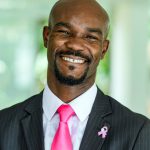
Runcie C.W. Chidebe is Executive Director, Project PINK BLUE. He is at the moment a Commonwealth Scholar on Transforming and Leading in Health Care at Birmingham City University, United Kingdom. He tweets @runciecwc
Some 283 rights and advocacy organisations have known as on the federal government to make sure the safety of girls and women towards gender-based violence through the lockdown interval as a result of outbreak of Coronavirus.
In an announcement collectively signed by Dr Abiola Akiyode-Afolabi, Executive Director, Women Advocates Research and Documentation Centre; Saudatu Mahdi, Secretary General, Women’s Rights Advancement and Protection Alternative; and Joy Ada Onyesoh, Country Director, Women’s International League for Peace and Freedom Nigeria on behalf of the organisations, they urged the federal government to strengthen the gender desks and household help items inside police.
The teams said that whereas the ‘stay-at-home’ order serves to guard households from the illness, it has the tendency to worsen sexual and gender-based violence towards ladies and women.
They added that have from different international locations like China exhibits a corresponding rise within the variety of ladies reporting elevated incidences of home violence.
The assertion mentioned, “It is just a matter of time that current types and prevalence will rise past the present index of one-in-three Nigerian ladies and women experiencing SGBV in personal and public areas.
“We due to this fact name on Nigeria’s Federal and state governments to make sure respect of girls’s human rights and safety from gender-based violence throughout the context of the lockdown in FCT, Lagos and Ogun states, and different states in complete or partial lockdown.
“As the nation locks down, and in a bid to prevent the pandemic, it is important that these support and protection services are available and accessible so that women are shielded from the risks of transferred aggression in their homes.”
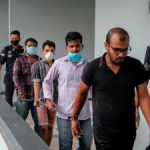
KUALA LUMPUR: A complete of 115 folks had been charged in several states in the present day for violating the Movement Control Order (MCO), and aside from administering the customary sentence of imprisonment or a wonderful, one court docket in the present day ordered 24 males to carry out community service.
This different punishment was meted out by the George Town Magistrates Court in PENANG, to the lads aged between 25 and 48, who performed soccer in a discipline in the grounds of the College General, a Catholic seminary right here on March 31 at 5.30pm, in contravention of the continuing MCO imposed by the federal government to include Covid-19.
In accordance with the provisions of the Offenders Compulsory Attendance Act 1954, all 24 who pleaded responsible, are required to report to the Prisons Department which is able to decide the kind of community service to be carried out for 3 hours a day over a three-month interval.
In KUALA LUMPUR, a complete of 22 people had been introduced earlier than Justice of the Peace’s courts throughout the town. They included Pakistani nationwide Mahmood Husaain, 40, who was fined RM2,500, with a three-month jail time period in default, for elevating his voice in direction of cops at a roadblock and for not cooperating with them.
Seven different people aged between 20 and 28, together with a feminine Kyrgyzstan citizen, had been fined between RM500 and RM1,000, with a two-month jail time period in default, for offences corresponding to loitering in a playground and jogging across the metropolis, between March 27 and April 1. Two Indonesian contract staff had been fined for gathering at a spot in Taman Mulia Jaya, Ampang and not using a legitimate purpose.
In NEGRI SEMBILAN, 14 people had been charged. These included 4 under-aged youngsters who had been accused of enjoying soccer with six others, on the Jalan Anggerik soccer discipline in Taman Marida, Senawang on March 29 at 6 pm. Sentencing for the youngsters shall be undertaken after the court docket receives related social reviews on the 4.
In PERAK, 38 people had been charged and these included 12 overseas nationals aged between 17 and 47 years who had been every fined RM1,000 by the Ipoh High Court. At the Kampar Justice of the Peace’s court docket, 12 people had been fined between RM1,000 and RM5,000, and sentenced to jail for between two and 7 months. Two of the offenders had been charged with obstructing a civil servant in the course of conducting his responsibility, and for refusing to furnish id playing cards when questioned by the police.
In MALACCA, 17 males together with 12 foreigners had been fined between RM300 and RM1,000, with two weeks to two months in jail in default, for transferring from one location to one other with out legitimate causes. The foreigners included residents of Pakistan, Nepal, Bangladesh and Myanmar.
In GURUN, six males aged between 23 and 42 years had been fined RM1,000 by the Magistrates Court right here for violating the MCO between March 28 and 30.
One of the lads, aged 23, was additionally charged with an offence below part 12 of the Dangerous Drugs Act 1952 however he was allowed bail of RM4,000, with case point out set for June 18. — Bernama
Read More
https://www.thesundaily.my/local/mco-violations-115-charged-in-several-states-24-sentenced-to-community-service-MD2207097
According to John F. Kennedy, “The war against hunger is truly mankind’s war of liberation.” It is no longer news that Coronavirus (Covid-19) is quite alarming and far spreading while food prices have risen dramatically around the country in recent days, fuelling widespread concern and social unrest in communities confronted with devastating price increases when buying provisions and food stuff. Exactly what accounts for this wild upswing in market prices and what do these trends hold for those already living in precarious conditions?
Hunger and malnutrition are self-perpetuating issues that affect a person’s mental ability, health, work and productivity. They constitute the world’s greatest public health risk, more pressing than corona virus (Covid-19).
There will be restrictions of movement due to the outbreak of Covid-19 (Corona Virus) and yet the government have no plan for its citizen during the sit at home period while other countries made provisions for their citizen so as not to lose their lives to hunger because hunger kills faster than a virus. At least 70 per cent of Nigerians are living on stipend even when they go out to hustle to put food on their tables, what will be their fate staying at home for a longer period without having an alternative? How do they survive? If they eventually survive the virus, will they survive the hunger?
The Nigerian government should put a proper measure in place so our case won’t end up like that of Italy, Spain and America respectively or even worse. Nigerians cherish their lives and am very sure the whole of the cities will be empty like a grave yard if the government can roll out an economic stimulus package to its citizen or better still give out relief funds to every individuals.
Influential individuals and organizations are not left out, I personally go against the act of tokenism portrayed by our banking sectors as i see it as policy or practice of making only a symbolic effort. 80% Nigerians are bank users and as well have a BVN (Bank Verification Number), relief funds can be disbursed to Nigerians via their BVN numbers irrespective of where they are. Billions of naira have been paid to the government account by individuals, organizations as well as the banking sectors to support during this pandemic while its citizens are languishing. I hope mosquitoes don’t swallow all the billions as we will be left with no choice as usual to believe it was swallowed by mosquitoes.
The government should put in place an alternatives for its citizen not just to tell us to sit at home and die of hunger as majority of Nigerians lives on hand to mouth on daily basis.
Education and awareness are the first steps to understanding and solving any issue and hunger is no different, while malnutrition is the single largest contributor to disease.
You pray for the hungry, then you feed them. This is how prayer works. – Pope Francis.
KUALA LUMPUR: Police today closed four roads in the Petaling Jaya area under the Movement Control Order (MCO).
They are Jalan 5/46 Gasing Indah (Petaling Jaya); Jalan Persiaran Mahogani (Section 9); Jalan Persiaran Jati (Section 8); and Jalan Persiaran Sungai Buloh (TSB) in Kota Damansara.
Petaling Jaya District Police chief ACP Nik Ezanee Mohd Faisal said the closures were to control the movement of residents and reduce the risk of Covid-19 infection.
He said motorists could use alternative routes like Jalan Pantai-New Pantai Expressway (NPE), Jalan Persiaran Kenanga-Kota Damansara Toll, Jalan Persiaran Surian-Palm Spring Kota Damansara and Jalan Persiaran Tropicana-Casa Tropicana.
“After 11 days of the MCO, we found that people are beginning to get used to it and becoming more responsible, although there are defiant individuals who used alternative routes to avoid the six road blocks that have been set up,” he said in a statement today, adding that the road closures were being carried out after reviewing the Health Ministry’s infection trend and statistics.
He, however, said that the closed roads could still be accessed by ambulances, police vehicles and those from the Fire and Rescue Department and Petaling Jaya City Council.
“We suggest that those affected by the closures obey the MCO and be patient in facing the difficulties in a bid to stem the spread of the virus,” he said, adding that four personnel would be stationed at each road closure for 24 hours daily. — Bernama
Read More
https://www.thesundaily.my/local/police-close-four-roads-in-pj-NH2191690
The popular myth that a spider is never more than a few feet away is arguably more true of lithium-ion batteries than of arachnids. Powering everything from smartphones and laptops to electronic cigarettes, lithium-ion batteries beat out alternative sources of power because of their top-notch energy density and long life cycle, meaning they can be recharged over and over again before breaking down. Yet for all these advantages, lithium-ion batteries come with a major concern: They can catastrophically ignite when they overheat.
Read More
https://techxplore.com/news/2020-03-tough-power-source-lithium-ion-battery.html
Photovoltaic solar cells are a promising alternative to fossil fuels, but they need to be a lot more efficient before they can go into widespread use. Scientists have pushed current supercomputing power to the limit looking for that improved efficiency, but the arrival of exascale computing within the next few years will allow them to take this quest to the next level.
Read More
https://techxplore.com/news/2020-03-lab-collaborates-photovoltaic-materials-exascale.html
Since e-scooters arrived in Atlanta in spring 2018, roads and sidewalks from midtown to downtown have been abuzz with the devices, which provide a fast, fun and affordable transportation alternative.