Tag: 2019

  • Tackling 5G-based mobile computing and cloud computing security concerns head-on

    Tackling 5G-based mobile computing and cloud computing security concerns head-on

    In a June 2019 report, telecommunications equipment provider Ericsson predicted that there will be 8.3 billion mobile broadband subscriptions by the end of 2024, which translates to 95 percent of all subscriptions by then. Total mobile data traffic will reach 131 exabytes per month (1 exabyte = 1 billion gigabytes), with 35 percent carried by 5G networks.

    Read More

    Views: 0

  • Decarbonizing energy supply by using community power

    Decarbonizing energy supply by using community power

    Renewable energy has become a mainstream source of power production. The estimated share of renewables in global electricity generation reached 26 % at the end of 2018, while far less growth occurred in heating, cooling and transport, according to the Renewables 2019 Global Status Report. With the increased use of renewable energy sources (RESs) like solar and wind, citizens and communities are seen as key to the clean energy transition’s success.

    Read More

    Views: 0

  • WHO launch eEML

    WHO launch eEML

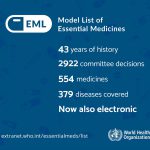
    The World Health Organization has launched a new easy-to-access, digital version of its Model list of Essential Medicines (EML). The move will revolutionize the way this core WHO reference tool is used.

    More than 150 countries currently use the WHO list to work out which medicines best meet their national health contexts and priorities, so they can compile their own national essential medicines lists.

    Essential medicines are those that satisfy the priority health care needs of a population. They are the medicines that need to be available in a functioning health system at all times, in appropriate dosage forms, of assured quality, and at prices individuals and the community can afford.

    Keeping up-to-date lists of the most important medicines a country needs is key to achieving health for all in a sustainable way.

    Since 1977, the WHO list has been revised every 2 years (most recently in 2019) by a group of experts and published in print or PDF formats. It includes information about available dose forms and strengths; specifications as to who should take a medicine; what conditions a medicine can treat and how it should be taken, as well as details about the clinical evidence supporting recommendations being made.

    The new electronic version brings the traditional EML to smartphones and computer screens in a comprehensive, freely accessible, online database. Instead of flicking through pages of information, users can search by simply clicking on the name of a medicine, for example, or a health issue. They can also make their own customized lists by exporting the list – in full or in part – into an Excel or Word version.  

    The electronic EML is the latest step in WHO’s effort to harness digital technologies to drive improvements in global public health, and advance progress towards universal health coverage. 


    WHO launch eEML
    Read More
    https://www.who.int/news-room/detail/27-02-2020-who-launch-e-eml

    Views: 0

  • WHO outlines steps to save 7 million lives from cancer

    WHO outlines steps to save 7 million lives from cancer

    The World Health Organization (WHO) today spells out the need to step up cancer services in low and middle-income countries. WHO warns that, if current trends continue, the world will see a 60% increase in cancer cases over the next two decades. The greatest increase (an estimated 81%) in new cases will occur in low- and middle-income countries, where survival rates are currently lowest.

    This is largely because these countries have had to focus limited health resources on combating infectious diseases and improving maternal and child health, while health services are not equipped to prevent, diagnose and treat cancers. In 2019, more than 90% of high-income countries reported that comprehensive treatment services for cancer were available in the public health system compared to less than 15% of low-income countries.

    “This is a wake-up call to all of us to tackle the unacceptable inequalities between cancer services in rich and poor countries,” says Dr Ren Minghui, Assistant Director-General, Universal Health Coverage/ Communicable and Noncommunicable Diseases, World Health Organization. “If people have access to primary care and referral systems then cancer can be detected early, treated effectively and cured. Cancer should not be a death sentence for anyone, anywhere.”

    Yet, progress in poorer countries is achievable. WHO and the International Agency for Research on Cancer (IARC) are releasing two coordinated reports on World Cancer Day (4 February), in response to government calls for more research into the scope and potential policies and programmes to improve cancer control.

    “At least 7 million lives could be saved over the next decade, by identifying the most appropriate science for each country situation, by basing strong cancer responses on universal health coverage, and by mobilizing different stakeholders to work together”, said Dr Tedros Adhanom Ghebreyesus, Director-General, WHO.

    WHO highlights a wide range of proven interventions to prevent new cancer cases. These include controlling tobacco use (responsible for 25% of cancer deaths), vaccinating against hepatitis B to prevent liver cancer, eliminating cervical cancer by vaccinating against HPV, screening and treatment, implementing high-impact cancer management interventions that bring value for money and ensuring access to palliative care including pain relief.

    “The past 50 years have seen tremendous advances in research on cancer prevention and treatment,” says Dr Elisabete Weiderpass, Director of IARC. “Deaths from cancer have been reduced. High-income countries have adopted prevention, early diagnosis and screening programmes, which together with better treatment, have contributed to an estimated 20% reduction in the probability of premature mortality between 2000 and 2015, but low-income countries only saw a reduction of 5%. We need to see everyone benefitting equally.” The challenge will be for countries to select treatments balancing considerations including cost, feasibility and effectiveness. Each government is tasked with choosing the appropriate innovative cancer therapies, while recognizing that established treatments, many of which are very effective and affordable, can provide benefits for cancer without causing financial hardship.

    Note to editors

    World Health Organization

    Report on Cancer: Setting priorities, investing wisely and providing care for all

    The report aims to set the global agenda on cancer, mobilize stakeholders and help countries set priorities for investing in cancer control and universal health coverage. It introduces the principles, tools and current priority cancer control interventions in the context of the current and future cancer burden and opportunities.

    International Agency for Research on Cancer

    World Cancer Report “Cancer research for cancer prevention”

    The report focuses on prevention and offers the most comprehensive overview of relevant research available to date, ranging from descriptive etiology, cellular and molecular biology, toxicology and pathology through to behavioural and social science. Key chapters include discussions on the impact of inequalities in cancer, vaccination and screening, genomic individual susceptibility to cancer and the finer identification of those at risk, which may allow ‘precision cancer prevention’.

    WHO outlines steps to save 7 million lives from cancer
    Read More
    https://www.who.int/news-room/detail/04-02-2020-who-outlines-steps-to-save-7-million-lives-from-cancer

    Views: 0

  • France pledges US$100 million (€90 million) for WHO Academy

    France pledges US$100 million (€90 million) for WHO Academy

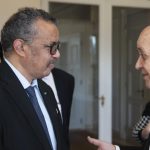
    Geneva: France’s Minister for Europe and Foreign Affairs, Mr Jean-Yves Le Drian, and Dr Tedros Adhanom Ghebreyesus,  Director-General of WHO today met at the Permanent Mission of France to the United Nations in Geneva to discuss the WHO Academy, which will be the world’s largest and most innovative lifelong learning platform in global health.

    The WHO Academy aims to reach millions of people worldwide, offering high-tech learning environments at a “hub” in Lyon with “spokes” in the six WHO regions. The Academy will provide learning opportunities for leaders, educators, researchers, health workers, WHO staff and the broader public, and will deliver high quality, multilingual learning, both online and in-person, alongside a cutting-edge simulation centre for health emergencies.

    The discussion today follows a Declaration of Intent signed by Emmanuel Macron, President of the French Republic and Dr Tedros on 11 June 2019, and a pledge by France in the amount of US$ 100 million (€ 90 million) to WHO to support the creation of the WHO Academy, which will be established as an internal division within WHO.

    “Technology and innovation in learning are creating exciting new opportunities to accelerate progress towards health for all in every country,” said Dr Tedros Adhanom Ghebreyesus, Director-General of WHO. “The WHO Academy will support millions of learners to maximize health impacts with the best evidence, adult learning approaches and state-of-the-art technologies.”

    By propelling and strengthening digital innovations and lifelong learning opportunities around the world, the WHO Academy will play an instrumental role towards achieving WHO’s triple billion goal by 2023 and the health Sustainable Development Goals: 1 billion more people will benefit from universal health coverage; 1 billion more will be better protected in health emergencies, and 1 billion more will enjoy improved health and wellbeing.

    The funding from France represents a commitment to accelerate the development of the WHO Academy, and confirms the engagement of France — a longstanding partner of WHO and a key actor in global health – and its strong support to the ambitions of 13th WHO General Programme of Work to ensure healthy lives and well-being for all ages. 


    France pledges US$100 million (€90 million) for WHO Academy
    Read More
    https://www.who.int/news-room/detail/24-02-2020-france-pledges-us100-million-for-who-academy

    Views: 0

  • Statement on the meeting of the International Health Regulations (2005) Emergency Committee for Ebola virus disease in the Democratic Republic of the Congo on 12 February 2020

    Statement on the meeting of the International Health Regulations (2005) Emergency Committee for Ebola virus disease in the Democratic Republic of the Congo on 12 February 2020

    The meeting of the Emergency Committee convened by the WHO Director-General under the International Health Regulations (IHR) (2005) to review the current Ebola virus disease (EVD) outbreak in the Democratic Republic of the Congo (DRC) took place on Wednesday, 12 February 2020, from 14:00 to 16:45 Geneva time (CEST).

    Proceedings of the meeting

    Members and advisors of the Emergency Committee were convened by teleconference.

    The Secretariat welcomed the Committee and thanked them for their support. The meeting was turned over to the Chair, Dr Robert Steffen.

    Dr Steffen also welcomed the Committee and gave the floor back to the Secretariat.

    Representatives of WHO’s legal department and the department of compliance, risk management, and ethics briefed the Committee members on their roles and responsibilities.

    Committee members were reminded of their duty of confidentiality and their responsibility to disclose personal, financial, or professional connections that might be seen to constitute a conflict of interest. Each member who was present was surveyed and no conflicts of interest were judged to be relevant to the meeting.

    The Chair then reviewed the agenda for the meeting and introduced the presenters.

    Presentations were made by representatives of the Ministry of Health of the Democratic Republic of the Congo (DRC), the WHO Secretariat, and the UN Ebola Emergency Response Coordinator.

    The current situation in the DRC was reviewed. As of 10 February 2020, there were a total of 3431 cases, of which 3308 were confirmed and 123 were probable. 2253 persons have died (66%). Between 3 and 9 February 2020, three new confirmed cases were reported in Beni Health Zone, North Kivu. These three cases were already registered as contacts and two were under surveillance at the time of detection. More than 2000 contacts are being followed. There has been an increase in the number of security incidents in recent months.

    Challenges that remain include: strengthening of community acceptance for full commitment to response measures; protection of personnel at strategic health checkpoints; improvement of infection prevention and control practices in health facilities; strengthening of the local health system; and comprehensive treatment and support for patients in recovery.

    The WHO Secretariat gave an overview of the epidemiological situation, which shows an overall encouraging trend in case incidence and geographic spread. It was noted that sustaining this progress depends on the security situation and control of the well-known drivers of transmission, particularly in traditional health facilities, and on continued trust and communication with the community.

    A risk communication and community engagement programme has been developed, as has an EVD survivors programme. It is critical to ensure the long-term sustainability of these two initiatives.   

    The situation in countries neighbouring DRC was reviewed, as was preparedness in nonaffected areas of DRC. An EVD operational readiness standardized approach has been implemented in 9 priority countries. More than 2400 alerts have been investigated, and more than 14,600 health workers have been vaccinated.

    The UN Ebola Emergency Response Coordinator gave a brief report on operational support, focused on security challenges and preparations for any resurgence of disease.

    Context and Discussion

    The Committee noted a great deal of progress in the situation since its last meeting and commended the response, under the leadership of the DRC Ministry of Health and the multisectoral coordination commission established in July 2019. Support provided by WHO, UN agencies, nongovernmental organizations and other partners has also contributed to limiting the spread and impact of this virus in a difficult context. An increase in the number of alerts was attributed to strong and proactive community surveillance.

    Conclusions and Advice

    It was the unanimous view of the Committee that this event still constitutes a public health emergency of international concern (PHEIC) under the IHR (2005).

    The Committee acknowledged the revised risk assessment, which puts the risk now as high at national and regional levels, and low at the global level.

    The Committee was concerned that withdrawing the PHEIC now might have adverse consequences for the response efforts through diminishing focus. Additionally, although the primary concern of the Committee is EVD, there are serious ongoing outbreaks of other diseases, including measles and cholera, in DRC. The country continues to need support to combat infectious diseases as well as to strengthen its health system. Further, there remains an urgent need to maintain international solidarity for the response.

    The Committee noted the ongoing discussions about the interpretation in the text of the IHR (2005) of the terms international and regional spread, and about creating an intermediate level of response between the binary possibilities of PHEIC or no PHEIC, in a way that does not require reopening negotiations on the Regulations. The Committee supports these discussions, as an intermediate level would be as useful for gradually ending a PHEIC and for signaling the potential for one to be declared.

    The Committee provided the following advice to the Director-General for his issuance as revised Temporary Recommendations under the IHR (2005).

    For DRC:

    • Sustain the political commitment and multisectoral coordination approach to the response.
    • Continue to engage and build trust with associations of survivors to facilitate rapid detection of any cases arising from exposure to infected bodily fluids of survivors.
    • Continue to strengthen capacity, implementation, and coordination for community awareness and engagement, including a focus on hotspots, preventing resurgence where cases have declined, and to support survivors in their communities.
    • Further enhance the acceptance of response measures and address access and security issues by engaging influencers and decision makers for all interventions.
    • Strengthen measures to prevent and manage nosocomial infections, including systematic mapping of health facilities, targeting of IPC interventions and sustain support to those facilities through monitoring and supervision, including in private-sector and traditional health facilities.
    • Continue cross-border screening and step up monitoring at checkpoints around hotspots and at main roads.
    • Continue to implement and share real-time full-genome genetic sequencing of all new confirmed cases.
    • Strengthen measures to prevent and manage nosocomial infections, including systematic mapping of health facilities, targeting of IPC interventions and sustain support to those facilities through monitoring and supervision.
    • Strengthen preparedness in non-affected provinces of DRC, and more generally strengthen the health system across the country to respond to concurrent health emergencies.
    • Continue to implement optimal vaccine strategies that have proven maximum impact on curtailing the outbreak, as recommended by WHO’s Strategic Advisory Group of Experts (SAGE).

    For countries at risk:

    • At-risk countries should maintain their work with partners to improve their preparedness for detecting and managing imported or locally acquired cases, including the transparent sharing of detailed information on suspect cases, as required by the International Health Regulations (2005), and sharing laboratory samples of suspect cases for confirmatory testing in accordance with WHO norms and guidance.
    • Countries should continue to map population movements and sociological patterns that can predict risk of disease spread.
    • Risk communications and community engagement, especially at points of entry, should be maintained.

    For all countries:

    • As recommended previously, no country should close its borders or place any restrictions on travel and trade.
    • The Committee does not consider entry screening at airports or other ports of entry outside the region to be necessary.

    The Committee emphasized the importance of continued support by WHO and other national and international partners towards the effective implementation and monitoring of these recommendations.

    Based on this advice, the reports made by the affected State Party, and the currently available information, the Director-General accepted the Committee’s assessment and on 12 February 2020 maintained the Ebola outbreak in the Democratic Republic of the Congo as a Public Health Emergency of International Concern (PHEIC).

    The Director-General endorsed the Committee’s advice and issued them as Temporary Recommendations under IHR (2005) to reduce the international spread of Ebola, effective 12 February 2020. The Director-General thanked the Committee Members and Advisors for their advice and requested their reassessment of this situation within two months or earlier if the situation requires.

    Statement on the meeting of the International Health Regulations (2005) Emergency Committee for Ebola virus disease in the Democratic Republic of the Congo on 12 February 2020
    Read More
    https://www.who.int/news-room/detail/12-02-2020-statement-on-the-meeting-of-the-international-health-regulations-(2005)-emergency-committee-for-ebola-virus-disease-in-the-democratic-republic-of-the-congo-on-12-february-2020

    Views: 0

  • Assessing national guidelines on responding to violence against children in the Eastern Mediterranean Region

    Assessing national guidelines on responding to violence against children in the Eastern Mediterranean Region

    In 2019 WHO published guidelines on the health sector response to child maltreatment which describe the role of frontline healthcare providers in recognizing child abuse and neglect and providing appropriate physical and mental health care to child victims of violence. WHO’s Regional Office for the Eastern Mediterranean is using these guidelines to assess and where needed improve existing national health protocols to ensure that child victims of violence receive appropriate support and treatment.


    Assessing national guidelines on responding to violence against children in the Eastern Mediterranean Region
    Read More
    https://www.who.int/news-room/detail/18-02-2020-assessing-national-guidelines-on-responding-to-violence-against-children-in-the-eastern-mediterranean-region

    Views: 0

  • WHO Global Initiative for Childhood Cancer: progress on all fronts

    WHO Global Initiative for Childhood Cancer: progress on all fronts

     Peru shows the way forward and the courage of Ander Martinez

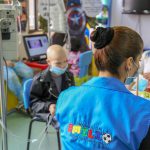
    “When Ander was diagnosed, I didn´t have the possibility to cover the cost of the treatment. It was very expensive, and I had nothing,” says Rosalina Tocto, 29 years mother of Ander Martínez Tocto. Ander had just been diagnosed with acute leukemia at the young age of 6 years. From the beginning, the odds were stacked against him. He and his family lived in a rural town, six hours from the nearest city. His parents did not have a formal job, placing the family under financial strain.

    Ander and his family were not alone in this situation. “In Peru, nearly 1800 children and adolescents are diagnosed with cancer every year; however, up to 70% will have a late stage, often metastatic due to delays in diagnosis,” says Dr. Juan García, medical chief of the Pediatric Department of in the National Institute of Neoplastic Diseases (INEN) in Lima, Peru. “Most of our patients come from outside Lima and the majority of parents do not have formal employment and therefore do not have any type of insurance.”

    Fortunately, Peru has made a strong commitment to Universal Health Coverage. In 2009, a law was passed to improve access to care by introducing a mandatory health insurance system and registering everyone living in extreme poverty under Seguro Integral de Salud (SIS), regardless of age or circumstance.  

    Dr. Reina Bustamante, Executive Director of the Division of Prevention and Control of Cancer of the MINSA says “UHC is an important step in public health particularly for those who lack public or private insurance like Ander. In this context, we are trying to follow WHO guidance to achieve UHC and ensure all individuals and communities receive the health services they need without suffering financial hardship.”

    In 2019, Peru was selected as a focus country for the WHO Global Initiative for Childhood Cancer as the first focus country in the Region. The Global Initiative aims to improve survival for all children with cancer to at least 60% by 2030 while reducing suffering, altogether with the potential to save an additional one million lives.

    Four main goals were formulated for the national pediatric cancer plan: (1) improve early diagnosis of childhood cancer, (2) decrease treatment abandonment, (3) implement a national pediatric cancer registry and (4) improve the quality of services in pediatric oncology units.

    Dr. Liliana Vasquez, pediatric oncologist who works as an external consultant for the Division of Prevention and Control of Cancer of MINSA said, “Ten working groups have been established to achieve the goals.”

    Dr. Vivian Perez, advisor of the Non-Communicable Diseases Office in PAHO-Peru added “the initial focus for the Initiative will be on six cancers selected as tracers for monitoring progress across the health system, alongside engagement of at least six focus countries with a record of strong political commitment and foundational efforts supporting children with cancer.”

    For Ander, his health care team, the commitments from the government of Peru and partners and Global Initiative have made it possible to be successfully treated and will now allow him to dream of a healthy future though better access to surveillance monitoring and psycho-oncological support aimed at childhood cancer survivors.

    Peru is showing what is possible for all countries. By concerted action and promoting universal health coverage, every child in the world can have access to high-quality care with the greatest likelihood of survival, and every family should be protected from financial hardship. We can do more together. 


    WHO Global Initiative for Childhood Cancer: progress on all fronts
    Read More
    https://www.who.int/news-room/detail/14-02-2020-who-global-initiative-for-childhood-cancer-progress-on-all-fronts

    Views: 0

  • Four countries in the African region license vaccine in milestone for Ebola prevention

    The Democratic Republic of the Congo (DRC), Burundi, Ghana and Zambia have licensed an Ebola vaccine, just 90 days after World Health Organization (WHO) prequalification. Registration of the vaccine is expected in additional countries in the coming weeks.

    The licensing of the vaccine means that the manufacturer can stockpile and widely distribute this vaccine to African countries at risk of Ebola virus disease outbreaks. Once licensed doses are available, use of the vaccine will not require clinical trial or other research protocols.

    “The approval of the Ebola vaccine by these countries is another milestone in the fight against this unforgiving disease,” said WHO Director-General Dr Tedros Adhanom Ghebreyesus. “Africa has rallied to cement hard-fought progress to keep its people safe from Ebola.”

    WHO accelerated the licensing and roll-out of the Ebola vaccine by certifying that it met the organization’s standards for quality, safety and efficacy in its fastest vaccine prequalification process ever, announced in November 2019.

    The speed with which this has been achieved has been made possible by a different approach, where national licensing procedures were done in parallel based on one single scientific review process. Usually, these process are done one by one, which can take years. The process was led by WHO with the participation of the African Vaccine Regulatory Forum (an African network of national regulatory authorities and ethics committees), the European Medicines Agency, and Merck.

    “The rapid approval of the Ebola vaccine by countries in the Africa Region helps ensure this critical prevention tool will be available when and where it is needed most,” said Dr Matshidiso Moeti, WHO Regional Director for Africa. “This kind of collaboration and innovation is a model for other health priorities.”

    The injectable Ebola vaccine, Ervebo, is manufactured by Merck (known as MSD outside the US and Canada). Preliminary study results have shown a 97.5% vaccine efficacy. Data also suggests that vaccinating people who are already infected reduces their chances of dying.

    In response to the ongoing Ebola outbreak in the DRC, over 290 000 people have been vaccinated under compassionate use protocols. Once licensed doses are available, use of the vaccine in DRC will no longer require these protocols

    Read More
    https://www.who.int/news-room/detail/14-02-2020-four-countries-in-the-african-region-license-vaccine-in-milestone-for-ebola-prevention

    Views: 0

  • WHO and FIND formalize strategic collaboration to drive universal access to essential diagnostics

    Geneva, Switzerland – 10 February 2020 – The World Health Organization (WHO) and the Foundation for Innovative New Diagnostics (FIND) announced today that a memorandum of understanding has been signed by the two organizations to formalize a strategic collaboration that will strengthen diagnosis in resource-poor countries by closing major diagnostic gaps at country level and bolstering disease surveillance that will inform public health initiatives and enhance outbreak preparedness and response.

    “This collaboration is an inspiring development that will take us a long way towards ensuring access to diagnostics to all who need them,” said Dr Tedros Adhanom Ghebreyesus, Director-General of the World Health Organization. “Global health challenges such as the ongoing novel coronavirus (2019-nCoV) outbreak demonstrates that without these essential elements of health systems, we cannot hope to promote health, keep the world safe, and serve the vulnerable. I look forward to working closely with FIND to determine what countries need and to forge a path to deliver these innovations so that no one is left behind.”

    Diagnosis is a driver of patient, financial and health systems impact, and a critical enabler of universal health coverage, but it is also the weakest link in the care cascade. This is especially true in primary healthcare settings in low- and middle-income countries. A unique and unprecedented opportunity exists to expand the role and impact of diagnostics to fully realize their potential to address major health security threats and evolving disease burdens through technological and digital advances.

    FIND has been an active partner with WHO since 2008 and a WHO Collaborating Centre since 2014, acting in the areas of laboratory strengthening and diagnostic technology evaluation. This expanded collaboration will put in place the building blocks necessary to enable transformative change in a move toward a country-led diagnostics alliance. Initial workstreams will focus on demand-driven access to essential diagnostics and the development of national Essential Diagnostics Lists, alongside collection of data that assist the scale up of diagnostics to support low- and middle-income countries on their paths to universal health coverage.

    “Each and every person has the right to a quality, timely diagnosis,” said Catharina Boehme, CEO of FIND. “Comprehensive diagnostic services underpin functional and efficient health systems not only to manage day-to-day healthcare needs, but also to ensure new disease outbreaks can be spotted and contained quickly. Working closely with WHO as part of a country-led alliance, we will strive to ensure that low- and middle-income countries have what they need to develop their own comprehensive, data-driven diagnostic strategies that enable universal health coverage and empower disease surveillance. Our ambition is that all patients, providers and decision-makers have access to the diagnostic solutions needed for optimal health outcomes.”

    The strategic collaboration agreement will initially run for a period of 5 years, until 2025.

    #  #  #

    About FIND

    FIND is a global non-profit organization that drives innovation in the development and delivery of diagnostics to combat major diseases affecting the world’s poorest populations. Our work bridges R&D to access, overcoming scientific barriers to technology development; generating evidence for regulators and policy-makers; addressing market failures; and enabling accelerated uptake and access to diagnostics in low- and middle-income countries (LMICs). Since 2003, we have been instrumental in the development of 24 new diagnostic tools used in 150 LMICs. Over 50 million FIND-supported products have been provided to our target markets since the start of 2015. A WHO Collaborating Centre, we work with more than 200 academic, industry, governmental, and civil society partners worldwide, on over 70 active projects that cross six priority disease areas. FIND is committed to a future in which diagnostics underpin treatment decisions and provide the foundation for disease surveillance, control and prevention. For more information, please visit www.finddx.org


    About WHO

    The World Health Organization is the directing and coordinating authority for health within the United Nations system. It is responsible for providing leadership on global health matters, shaping the health research agenda, setting norms and standards, articulating evidence-based policy options, providing technical support to countries and monitoring and assessing health trends. WHO is committed to the enjoyment of the highest attainable standard of health as one of the fundamental rights of every human being without distinction of race, religion, political belief, economic or social condition. WHO’s current global programme of work sets out three interconnected strategic priorities: ensuring healthy lives and well-being for all at all ages; achieving universal health coverage; and addressing health emergencies and promoting healthier populations. These priorities are linked to three ambitious targets, the “triple billion”: one billion more people to benefit from universal health coverage; one billion more people better protected from health emergencies; and one billion more people enjoying better health and well-being.


    Read More
    https://www.who.int/news-room/detail/10-02-2020-who-and-find-formalize-strategic-collaboration-to-drive-universal-access-to-essential-diagnostics

    Views: 0