Tag: 2018

  • WHO teams with partners to mitigate the potential impact of the COVID-19 pandemic in malaria-affected areas

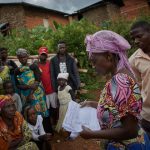
    The rapid spread of COVID-19 is testing the resilience of robust health systems around the world. WHO and its partners are taking measures to mitigate the potential impact of sustained transmission of the coronavirus in malaria-endemic settings –
    particularly in sub-Saharan Africa, which shoulders more than 90% of the global malaria burden.

    To date, a small proportion of the global COVID-19 cases have been identified in malaria-affected countries. However, as of 17 March, 25 countries in the African Region had reported cases of COVID-19, and local transmission of the disease had been detected
    in 6 countries (Algeria, Cameroon, Kenya, Rwanda, Senegal, South Africa).

    “At this point, we still don’t know what the COVID-19 pandemic will look like in sub-Saharan Africa,” said Dr Pedro Alonso, Director of the WHO Global Malaria Programme. “But we do know that when public health emergencies have
    hit parts of Africa with weak health systems and high malaria transmission, the impact on malaria disease and death has been very severe.”

    The 2014-2016 Ebola outbreak in Guinea, Liberia and Sierra Leone, for example, undermined malaria control efforts and led to a massive increase in malaria-related illness and death in the 3 countries.

    Joint action 

    To support malaria-affected countries, WHO has identified the need for a set of inter-related actions among global partners: 

    • generating, using and disseminating accurate information; 
    • mitigating against health system disruptions; and 
    • ensuring the continuity of routine malaria-specific interventions while also providing, where needed, additional emergency measures, such as mass drug administration, in health systems significantly impacted by COVID-19. 

    The Organization convened partners on 17 March to discuss areas of collaboration, coordination and next steps.

    WHO has begun monitoring the evolving geographic location of COVID-19 cases to understand the extent to which the coronavirus and malaria affect the same target groups. This information will reveal who is likely to be at greatest risk, where and when,
    and thus inform the need for malaria-specific interventions to save lives.

    In parallel, WHO is working across the 3 levels of the organization to ensure that any advice intended to curb coronavirus transmission and to guide COVID-19 disease management is appropriate in malaria-affected settings.  

    In recent days, there have been reports of disruptions, as a result of COVID-19, in the production and global supply chains of essential malaria commodities, such as the long-lasting insecticidal nets, diagnostic testing and antimalarial medicines. Coordinated
    efforts are required to ensure the availability of key malaria control tools – particularly in countries with a high burden of the disease – and that efforts to limit transmission of COVID-19 do not compromise access to malaria prevention,
    diagnosis and treatment services. 

    Malaria-affected countries may also experience disruptions in health systems in the coming months. A marked increase in febrile patients seeking treatment for COVID-19 at health facilities, for example, would present a significant challenge for a health
    workforce that may itself be depleted by the disease.

    Policy guidance

    WHO is developing guidance for national malaria control programmes and implementing partners to prepare them for the challenges they may face as result of COVID-19.  Among other areas, the guidance will address the mitigation of stockouts of
    malaria medicines and commodities; the use of preventive malaria therapy for health workers; the deployment of emergency measures in some settings; and the generation of information relating to the geographic distribution and populations affected
    by COVID-19 in malaria-endemic settings.  

    Restrictions around grouping people together – for training, social and behavior change communication activities, fixed-site distribution and clinical care – as well as the restrictions around movement of people in the country, will require
    significant adaptations in order to deliver quality interventions and care.

    All people living in malaria-affected areas are advised to follow same precautions as the general population, including: frequent hand-washing, respiratory hygiene, social distancing, seeking prompt medical care if symptoms arise (cough, fever,
    difficulty breathing), and other WHO-recommended actions. 

    WHO stands ready to work with countries and other stakeholders to mitigate the negative impact of the coronavirus on malaria responses worldwide and, where possible, contribute towards a successful COVID-19 response.  

    About COVID-19

    COVID-19 is the infectious disease caused by the most recently discovered coronavirus. This new virus and disease were unknown before the outbreak began in Wuhan, China, in December 2019. Essential information on the COVID-19 pandemic can be found in
    a dedicated WHO site.

    About malaria

    Malaria is a preventable and treatable disease caused by parasites that are transmitted to people through the bites of infected female Anopheles mosquitoes. In 2018, there were an estimated 228 million cases of malaria worldwide and
    405 000 malaria-related deaths. For more on malaria, visit: www.who.int/malaria

    Read More
    https://www.who.int/news-room/detail/18-03-2020-who-teams-with-partners-to-mitigate-the-potential-impact-of-the-covid-19-pandemic-in-malaria-affected-areas

    Views: 0
  • The global economy at midyear: How our views have changed

    The global economy at midyear: How our views have changed

    Learn how Vanguard’s views on the economy and markets have shifted since the end of 2018.
    The global economy at midyear: How our views have changed
    Read More
    https://investornews.vanguard/the-global-economy-at-midyear-how-our-views-have-changed/

    Views: 0

  • End in sight, but flare-ups likely in the Ebola outbreak in the Democratic Republic of the Congo

    End in sight, but flare-ups likely in the Ebola outbreak in the Democratic Republic of the Congo

    Remarks by Dr Ibrahima Socé Fall, World Health Organization Assistant Director-General, Emergency Response


    Good afternoon. 

    I hope that your busy week was interrupted, like mine, with a moment of joy on Tuesday.

    That moment was the celebration of a woman being discharged from an Ebola treatment centre in Beni. Her name is Masiko.

    She was the last person in the Democratic Republic of the Congo confirmed to have Ebola.

    Health workers and other responders sacrificed a lot to get to this point. 

    Since the outbreak was declared in August 2018 there have been 420 attacks on health facilities in DRC, resulting in 11 deaths and 86 injuries among health care workers and patients.

    It’s been a huge amount of work. At the peak of the outbreak, more than 120 cases were being reported each week. 28 health zones were affected, with cases appearing 1200 kilometres apart. In response:

    • 11 labs have been set up to test around 3500 samples each week
    • 11 Ebola treatment centres were set up to care for people with Ebola
    • 300 000 people have been vaccinated
    • 250 000 contacts have been registered
    • 26 000 safe and dignified burials have been conducted
    • More than 3000 health facilities were identified for infection prevention and control support
    • More than 1000 metric tonnes of supplies have been delivered
    • An Ebola vaccine has been licensed, and two treatments found to be highly effective
    • Almost 160 000 million people have been screened for Ebola symptoms at borders or other points of control

    This work is continuing. The outbreak isn’t over. WHO recommends waiting two full incubation periods – that’s 42 days – after the last person tests negative a second time before declaring the end of the outbreak.

    We must stay in active response mode to get us over that finish line.

    We have to be prepared for other cases emerging. It’s is a very real risk.

    Remember that during the Ebola outbreak in West Africa flare-ups of new cases occurred after the end of the outbreak.

    There are four reasons why new cases may emerge during this 42-day period, or even after the end of the outbreak.

    • First, because of the complex security environment, Ebola transmission outside of groups under monitoring is possible.  
    • Second, Ebola virus can persist in used needles, syringes or vials for several weeks.
    • Third, Ebola virus can persist in the body fluids of survivors for many months, and can be transmitted well after recovery, or in rare cases can result in relapse – as we’ve already seen during this outbreak.
    • Finally, Ebola virus is present in an animal reservoir in the region, and there is always a risk of a new spillover to humans.

    This is why it’s critical to maintain surveillance and rapid response capacities.

    And that’s what we are doing. We’re still in full response mode.

    In addition to the activities I already mentioned, I have to underline how critical it is to continue supporting the Survivor Programme, which provides follow-up care for almost all of the 1169 survivors in 26 health areas in North Kivu and Ituri. The programme also helps reduce the risks of re-introduction events. 

    We need to continue this work until the end of the outbreak, to keep the capacity in place to rapidly respond to flare-ups, to keep supporting survivors after the outbreak, and to transition the capacities built in this response toward building a stronger health system. 

    But to be very frank, right now the world risks dropping the baton at the finish line. WHO faces an immediate US $20 million funding gap. If no new resources are received, we will run out of money before the end of the outbreak.

    We appreciate the generosity of donors who have supported the response since August 2018. Now we need to get over the finish line. WHO is calling on the international community to help us end this outbreak, and keep our promises to communities to build a stronger health system.

    If we are forced to scale back operations because of a lack of funds, and then a new case emerges, we might not have the people and resources on the ground that we need to shut down transmission quickly. Just a single case could re-ignite the epidemic.

    That would be a tragedy. An avoidable tragedy. 

    It is important that the global community doesn’t only focus efforts when there is an immediate threat, then walk away when the threat subsides.

    The health system has to be strong to stop much more than Ebola. It has to stop malaria, measles, cholera, and now COVID-19.

    There is a lot more work to do.

    Thank you.


    End in sight, but flare-ups likely in the Ebola outbreak in the Democratic Republic of the Congo
    Read More
    https://www.who.int/news-room/detail/06-03-2020-end-in-sight-but-flare-ups-likely-in-the-ebola-outbreak-in-the-democratic-republic-of-the-congo

    Views: 0

  • Super Tuesday marks first major security test of 2020

    Super Tuesday marks first major security test of 2020

    Tuesday’s presidential primaries across 14 states mark the first major security test since the 2018 midterm elections, with state and local election officials saying they are prepared to deal with everything from equipment problems to false information about the coronavirus.

    Read More

    Views: 0

  • It’s a bird. It’s a plane. It’s an e-scooter?

    It’s a bird. It’s a plane. It’s an e-scooter?

    Since e-scooters arrived in Atlanta in spring 2018, roads and sidewalks from midtown to downtown have been abuzz with the devices, which provide a fast, fun and affordable transportation alternative.

    Read More

    Views: 0

  • Study sheds light on new IEEE standard categories, showing power system impact

    Study sheds light on new IEEE standard categories, showing power system impact

    In 2003, when the Institute of Electrical and Electronics Engineers (IEEE) first drafted standards around distributed energy resources (DERs) connecting with the grid, solar power capacity was less than 1% of its current capacity. The standards document, IEEE 1547-2003, could not anticipate the technical challenges that solar and other DERs would present more than a decade later as a growing share of generation. These challenges were addressed in 2018 through a comprehensive revision of the standard.

    Read More

    Views: 0

  • Decarbonizing energy supply by using community power

    Decarbonizing energy supply by using community power

    Renewable energy has become a mainstream source of power production. The estimated share of renewables in global electricity generation reached 26 % at the end of 2018, while far less growth occurred in heating, cooling and transport, according to the Renewables 2019 Global Status Report. With the increased use of renewable energy sources (RESs) like solar and wind, citizens and communities are seen as key to the clean energy transition’s success.

    Read More

    Views: 0

  • Online training as a weapon to fight the new coronavirus

    More than 25 000 people across the globe have accessed real-time knowledge from WHO experts on how to detect, prevent, respond to and control the new coronavirus in the 10 days since the launch of an open online training.

    The learning team of the WHO Health Emergencies Programme worked with technical experts to quickly develop and publish the online course on 26 January – 4 days before the 2019-nCoV outbreak was declared a public health emergency of international concern.

    Approximately 3000 new users have registered for the training every day since its launch, demonstrating the high level of interest in the virus among health professionals and the general public. In addition, more than 200 000 people have viewed the introductory video to the course on YouTube.

    The high engagement levels emerged as the international community launched a US$675 million preparedness and response plan to fight further spread of the new coronavirus and protect states with weaker health systems.

    The free learning resource is available to anyone interested in novel coronavirus on WHO’s open learning platform for emergencies, OpenWHO.org. The platform was established 3 years ago with emergencies such as nCoV in mind, in which WHO would need to reach millions of people across the globe with real-time, accessible learning materials.

    The online training – entitled “Emerging respiratory viruses, including nCoV: methods for detection, prevention, response and control” – is currently being produced in all official UN languages and Portuguese.

    “Our job is to work with technical health experts to package knowledge using adult learning principles, quickly so that it is most useful to health workers and our staff,” said Heini Utunen, who manages OpenWHO for the WHO Health Emergencies Programme (WHE). “Our online platform – OpenWHO – is already accessed by users from every country on earth, providing more than 60 courses in 21 languages. Delivering trainings in the local language of responders is really important, especially in an emergency”.    

    WHE has been investing in learning and training to strengthen preparedness and real-time response to health emergencies. The programme developed its first-ever learning strategy in 2018 and has a small dedicated Learning and Capacity Development Unit that allows WHE to develop trainings quickly and get know-how to those who most need it at the front line.  

    For the latest information on the new coronavirus, visit the 2019-nCoV page.

    Read More
    https://www.who.int/news-room/detail/07-02-2020-online-training-as-a-weapon-to-fight-the-new-coronavirus

    Views: 0

  • A New Perspective on Medicine

    [ad_1]

    Society evalu resorts to pharmaceuticals as a means of alleviating pain, treating infection and illness, yet many of these synthetic drugs have long lists of side-effects. What the world doesn't know is the potency of natural remedies. Thus, medical coverage is not universal, and this precipitates the need for holistic treatments. Near Eastern medicine has largely been dismissed in favor of pharmaceuticals, in the process discarding millennia of medical knowledge. What can be cured with crushed clovers is now replaced with ibuprofen. This is one of the biggest flaws in our "universal" health care system. I developed a medical journal over last year spring break, and I have been expanding it ever since, adding holistic remedies used in place of synthetic drugs to treat a variety of ailments. Not only would this restore almost-forgotten medical knowledge, but it would also encourage a peaceful relationship between Muslims and other Near Eastern communities during a time when such peaceful relationships are vital.

    How long are we to remain ignorant of these things? Yes, perhaps medications and OTC drugs are much more efficient and work faster, but what happens to our appreciation for medical literature and the equivalent of a millennium of medical knowledge? Are they to be discarded? Thrown away?

    This is something that we, as a society, have to work toward, one step at a time.

    Recently, I put this to use. A few days ago, on January 6th, 2018 at about 9pm, my father indicated he was experiencing some discomfort in his right eye. Curious, I took a high resolution photo of the eye in question, in a slightly supine position. I analyzed the picture and discovered an irregular growth / inflammation in the right, upper eyelid. I do recall studying and reading about various eye infections and irregular growths in a few of my classes in school, such as conjunctivitis ("pink eye"), myasthenia gravis, and blepharitis. I came to conclude that the symptoms that my father was experiencing were characteristic of what is commonly called "stye". In stye, the eyelid is usually slightly red, almost looking like it was trying to develop into a minor for of blepharitis. I asked myself and my dad, "Perhaps this stye was the cause of lack of sleep? I asked this because a few blood vessels in his right eye were slightly bulging." No ", he replied. I read and researched about stye online. Just before my mom got up to go to the pharmacy to get him a few OTC's, I read that stye could be cured through ONE SIMPLE TECHNIQUE: HEAT.

    I told my father to apply heat (best option) so that the inflammation in the idea and whatever bacteria in there can dissociate (if that's the right word). He held a soaked, hot towel ABOVE his right eye (notice: he did not necessarily have to TOUCH his eye with the towel). He held it for 6-8 minutes and repeated this until the pain subsided. The next day, he performed the same procedure. After just two days routinely practicing the same procedure (WITHOUT MEDICATION), my father's eyelid returned back to its normal color and shape.

    So there you have it.

    Certain things CAN be cured by simply holistic, natural remedies. We like to think that doctors, physicians, pharmacists, etc. are "in charge" of Medicine. Not necessarily. Medicine can start at home, with us. One step at a time.

    [ad_2]

    Source by Masood Shawyan Jan

    Views: 0