Author: Abdul-Qadir

  • World TB Day 2020: It’s Time for solidarity

    World TB Day 2020: It’s Time for solidarity

    At this unique time in history when the world is grappling with the COVID-19 pandemic, the WHO Department of Global HIV, Hepatitis and STI Programmes stands in solidarity with governments and communities as they seek to maintain health services
    and continue to address the needs of patients suffering from HIV and tuberculosis (TB). 

    Despite being preventable and treatable, tuberculosis remains the world’s biggest infectious killer and the leading cause of death among people living with HIV (PLHIV), responsible for 32% of the 770 000 lives lost to HIV in 2018. People
    living with HIV are far more vulnerable (nearly 20 times more) to TB infection than people without HIV and are three times more likely to die during TB treatment.  

    While there are proven interventions that reduce TB deaths – such as provision of TB preventive treatment, adoption of novel diagnostics for earlier TB diagnosis and linkage to treatment, and antiretroviral therapy (ART) – we are far behind
    in scaling these up, and diagnostic and treatment gaps remain, with only half of estimated TB cases among PLHIV reaching care in 2018, only half of estimated PLHIV with TB receiving ART, and less than half of PLHIV new on ART initiating TB preventive
    treatment in a subset of countries which reported globally.

    On this World TB Day, WHO highlights two key interventions to reduce unnecessary TB deaths among PLHIV: 

    • (1) provision of TB preventive treatment for all eligible PLHIV; and 
    • (2) increased uptake of newer diagnostic tests such as the lateral flow urine lipoarabinomannan assay (TB-LAM.) 

    As the new Director for the Department of Global HIV, Hepatitis and STI Programmes, I support current efforts to continue and to take to scale TB activities. It’s Time for solidarity!

    -Meg Doherty, Director Global HIV, hepatitis and STI Programmes, WHO

    HIV programmes are encouraged to ensure that TB preventive treatment, including shorter WHO-recommended regimens, with updated guidance launched today, are provided to all eligible PLHIV as part of a routine package of care, including provision of ART, and that treatment completion is ensured.   

    In recent months, WHO has also released guidelines for use of a bedside urine TB-LAM test to accelerate earlier TB diagnosis, with significantly expanded eligibility criteria. As this test is “point of care” with the potential for earlier
    TB diagnosis and treatment initiation, HIV programmes should consider these recommendations as they enhance strategies for TB diagnosis among PLHIV, including as part of a routine package of advanced HIV care. 

    It’s Time to urgently scale up TB preventive treatment and TB diagnosis and strengthen referral and linkages to TB treatment at HIV service delivery points in all countries and continue to scale-up ART among PLHIV with TB. This applies to all populations
    at risk, including children, pregnant women and marginalized groups, to ensure no one is left behind.

    WHO calls for continued collaboration in countries across health programmes for harmonized and integrated policies and service delivery, and engagement with communities and other sectors. Unless HIV programmes scale up interventions to close these
    gaps in prevention, diagnosis and treatment both for TB and HIV, countries and their development partners will not meet our common target: a 75% reduction in TB deaths among PLHIV between 2010 and 2020. HIV mortality cannot be reduced without addressing
    the leading cause: tuberculosis.


    World TB Day 2020: It’s Time for solidarity
    Read More
    https://www.who.int/news-room/detail/24-03-2020-world-tb-day-2020-it-s-time-for-solidarity

    Views: 0
  • WHO Information Note: Ensuring continuity of TB services during the COVID-19 pandemic

    WHO Information Note: Ensuring continuity of TB services during the COVID-19 pandemic

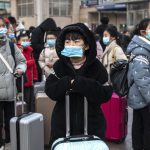
    As the world comes together to tackle the COVID-19 pandemic, it is important to ensure that essential health services and operations are continued to protect the lives of people with TB and other diseases or health conditions. Health services, including national programmes to combat TB, need to be actively engaged in ensuring an effective and rapid response to COVID-19 while ensuring that TB services are maintained.  

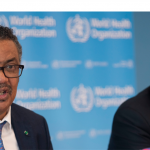
    In the lead- up to World TB Day, Dr Tedros Adhanom Ghebreyesus, WHO Director-General emphasized in a news release, “COVID-19 is highlighting just how vulnerable people with lung diseases and weakened immune systems can be. The world committed to end TB by 2030; improving prevention is key to making this happen.”  

    WHO Global TB Programme, along with WHO regional and country offices, has developed an information note, in collaboration with stakeholders. This note is intended to assist national TB programmes and health personnel to urgently maintain continuity of essential services for people affected with TB during the COVID-19 pandemic, driven by innovative people-centred approaches, as well as maximizing joint support to tackle both diseases.  

    “We stand in solidarity with those affected by COVID-19 and those at the frontlines of the fight to combat the disease,” said Dr Tereza Kasaeva, Director of the WHO Global TB Programme. “We need to act with urgency to ensure that in line with our vision of Health for All, no one with TB, COVID-19 or any health condition will miss out on the prevention and care they need. It’s time for action.”


    WHO Information Note: Ensuring continuity of TB services during the COVID-19 pandemic
    Read More
    https://www.who.int/news-room/detail/20-03-2020-who-information-note-ensuring-continuity-of-tb-services-during-the-covid-19-pandemic

    Views: 0

  • New WHO recommendations to prevent tuberculosis aim to save millions of lives

    Geneva –  New World Health Organization (WHO) guidance will help countries accelerate efforts to stop people with tuberculosis (TB) infection becoming sick with TB by giving them preventive treatment.

    A quarter of the world‘s population is estimated to be infected with TB bacteria. These people are neither sick nor contagious. However, they are at greater risk of developing TB disease, especially those with weakened immunity. Offering them TB
    preventive treatment will not only protect them from becoming sick but also cut down on the risk of transmission in the community.  

    As we mark World TB Day 2020, the disease remains the world’s top infectious killer. In 2018, 10 million people fell ill with TB worldwide and 1.5 million people lost their lives to this disease.

    “COVID-19 is highlighting just how vulnerable people with lung diseases and weakened immune systems can be,“ said Dr Tedros Adhanom Ghebreyesus, WHO Director-General. “The world committed to end TB by 2030; improving prevention is key
    to making this happen. Millions of people need to be able to take TB preventive treatment to stop the onset of disease, avert suffering and save lives”.

    Dr Tedros highlighted the importance to continue efforts to tackle longstanding health problems, including TB during global outbreaks such as COVID-19. At the same time, programmes already in place to combat TB and other major infectious diseases
    can be leveraged to make the response to COVID-19 more effective and rapid.

    Although some progress has been made towards targets set at the UN high-level Meeting on TB in 2018, TB preventive treatment has been largely neglected. Global leaders committed to ensuring access to TB preventive treatment to at least 24 million contacts
    of people with active TB and 6 million people living with HIV by 2022.  To date only a fraction of that target has been reached, with countries putting less than 430,000 contacts and 1.8 million people on TB preventive treatment in 2018.

    TB remains the top cause of death among people with HIV. TB preventive treatment works synergistically with antiretroviral therapy to prevent TB and save lives. Reinvigorated efforts by governments, health services, partners, donors and civil society
    will be needed to increase access to TB preventive treatment to the levels targeted.

    The new consolidated guidelines recommend a range of innovative approaches to scale up access to TB preventive treatment:

    • WHO recommends a scale-up of TB preventive treatment among populations at highest risk including household contacts of TB patients, people living with HIV and other people at risk with lowered” immunity or living in crowded settings.
    • WHO recommends an integration of TB preventive treatment services into ongoing case finding efforts for active TB. All household contacts of TB patients and people living with HIV are recommended to be screened
      for active TB. If active TB is ruled out, they should be initiated on TB preventive treatment.
    • WHO recommends that either a tuberculin skin test  or interferon-gamma release assay (IGRA) be used to test for TB infection. Both tests are helpful to find people more likely to benefit from TB preventive treatment
      but should not become a barrier to scale-up access. Testing for TB infection is not required before starting TB preventive treatment in people living with HIV, and children under 5 years who are contacts of people with active TB.
    • WHO recommends new shorter options for preventive treatment in addition to the widely used 6 months of daily isoniazid. The shorter options that are now recommended range from a 1 month daily regimen of rifapentine plus isoniazid
      to 3 months weekly rifapentine plus isoniazid, 3 months daily rifampicin plus isoniazid, or 4 months of daily rifampicin alone.

    “As people around the globe come together to commemorate World TB Day, WHO is calling on governments, affected communities, civil society organizations, health-care providers, donors, partners and the industry to unite forces and step up
    the TB response – notably for TB preventive treatment – to ensure no one is left behind,” said Dr Tereza Kasaeva, Director of WHO’s Global TB Programme. “The new WHO guidance shows the way forward for millions to rapidly
    access new tools and shorter, safer options for preventive treatment. The time for action is now.”

    TB preventive treatment is an affordable intervention that can prevent families from sliding into poverty and preserve the health and economy of whole communities. WHO anticipates that as new and safer drugs come onto the markets, and as prices
    fall, it will become a highly-cost effective way to save millions of lives.


    NOTES FOR EDITORS:

    WORK BY WHO AND PARTNERS

    WHO works closely with Member States including the US Government and technical and funding partners such as UNITAID to enhance access to shorter TB preventive treatment regimens. UNITAID-supported projects such as IMPAACT4TB and Cap-TB projects
    enabled by WHO with partners in Brazil, Cambodia, Cameroon, Côte d’Ivoire, Democratic Republic of Congo, Ethiopia, Ghana, India, Indonesia, Kenya, Lesotho, Malawi, Mozambique, South Africa, Uganda, United Republic of Tanzania and
    Zimbabwe are leading the way. The new treatment options are also now more affordable, thanks to the significant price drop of rifapentine – a key drug – facilitated recently by UNITAID, the Global Fund to Fight AIDS, Tuberculosis and Malaria
    and global biopharmaceutical company Sanofi, along with forthcoming arrangements underway with generic manufacturers.

    MORE ABOUT THE GUIDELINES

    The new consolidated WHO guidelines come with an operational handbook to help guide countries step-by-step as they take TB preventive treatment to scale. This includes guidance on how to prioritize and invest from demand creation for TB prevention
    to supervision and monitoring of the programme.

    The guidelines and operational handbook are also accompanied by an innovative mobile application – Prevent TB –to help health-care workers manage TB preventive treatment in their communities. Its online dashboard allows programme
    managers to visualize and monitor data in real time. The application can be customized by countries to suit their specific settings and is currently being adopted in India and Philippines.

    WORLD TB DAY

    The new guidelines and tools are being released ahead of World TB Day. World TB Day is observed on March 24 each year to raise public awareness and understanding about the world’s deadliest infectious killer – TB and its devastating
    health, social and economic impact on people around the world. Under the theme “It’s Time”, the spotlight this year is on urgently accelerating the TB response to save lives and end suffering.

    Read More
    https://www.who.int/news-room/detail/24-03-2020-new-who-recommendations-to-prevent-tuberculosis-aim-to-save-millions-of-lives

    Views: 0

  • Pass the message: Five steps to kicking out coronavirus

    Pass the message: Five steps to kicking out coronavirus


    Geneva, 23 March 2020: FIFA, the international governing body of football, and the World Health Organization (WHO) have teamed up to combat the coronavirus (COVID-19) by launching a new awareness campaign led by world-renowned footballers, who are calling on all people around the world to follow five key steps to stop the spread of the disease. 

    The “Pass the message to kick out coronavirus” campaign promotes five key steps for people to follow to protect their health in line with WHO guidance, focused on hand washing, coughing etiquette, not touching your face, physical distance and staying home if feeling unwell. 

    “FIFA and its President Gianni Infantino have been actively involved in passing the message against this pandemic since the very beginning,” said WHO Director-General Dr Tedros Adhanom Ghebreyesus at the virtual launch of the campaign at WHO headquarters in Geneva, Switzerland. “Be it through campaigns or funding, FIFA has stood up to the coronavirus, and I am delighted that world football is supporting WHO to kick out the coronavirus. I have no doubt with this type of support that together we will win.” 

    “We need teamwork to combat the coronavirus,” said FIFA President Gianni Infantino. “FIFA has teamed up with WHO because health comes first. I call upon the football community worldwide to join us in supporting this campaign to pass the message even further. Some of the greatest players to have played the beautiful game have put their names to the campaign and are united in their desire to pass the message to kick out COVID-19.”

    Twenty-eight players are involved in the video campaign, which is being published in 13 languages.

    Sami Al Jaber (KSA), Alisson Becker (BRA), Emre Belözoğlu (TUR), Jared Borgetti (MEX), Gianluigi Buffon (ITA), Iker Casillas (ESP), Sunil Chhetri (IND), Youri Djorkaeff (FRA), Han Duan (CHN), Samuel Eto’o (CMR), Radamel Falcao (COL), Laura Georges (FRA), Valeri Karpin (RUS), Miroslav Klose (GER), Philipp Lahm (GER), Gary Lineker (ENG), Carli Lloyd (USA), Lionel Messi (ARG), Mido (EGY), Michael Owen (ENG), Park Ji-sung (KOR) , Carles Puyol (ESP), Célia Šašić (GER), Asako Takakura (JPN), Yaya Touré (CIV), Juan Sebastián Verón (ARG), Sun Wen (CHN) and Xavi Hernández (ESP).

    A video campaign, which will be published on player and FIFA digital channels, is also being provided as individual localized files to the 211 FIFA member associations and media agencies, together with a graphics toolkit for implementation on social media to further pass the message. 


    Pass the message: Five steps to kicking out coronavirus 1

    Hands:

    “It starts with your hands,” says Alisson Becker, WHO Goodwill ambassador for health promotion, Liverpool FC and Brazil goalkeeper, and The Best FIFA Men’s Goalkeeper, 2019. “Please wash your hands frequently with soap and water or an alcohol-based solution.”

    Such frequent washing with soap and water, or preferably with an alcohol-based hand solution, kills viruses that may be on your hands. It is simple, but it is very important.

    Pass the message: Five steps to kicking out coronavirus 2

    Elbows:

    “Cover your nose and mouth with a bent elbow or tissue when you sneeze or cough,” says Carli Lloyd two-time FIFA Women’s World Cup winner from the United States. “Dispose of tissue immediately and wash your hands.”

    Droplets spread the coronavirus. By following respiratory hygiene, you protect the people around you from contracting viruses, such as cold, flu and coronavirus.

    Pass the message: Five steps to kicking out coronavirus 3

    Face:

    “Avoid touching your face, particularly your eyes, nose or mouth to prevent the virus from entering your body,” adds FC Barcelona and Argentina forward Lionel Messi, The Best FIFA Men’s Player in 2019, and a multiple FIFA Ballon d’Or winner.

    Hands touch too many surfaces and can quickly pick up viruses. Once contaminated, hands can transfer the virus to your face, from where the virus can move inside your body, making you feel unwell.

    Pass the message: Five steps to kicking out coronavirus 4

    Distance:

    “In terms of social interaction, take a step back,” says Han Duan, who represented China PR 188 times in an international career that spanned 11 years. “Stay at least one metre distance from others.”

    By maintaining such social distancing, you are helping to avoid breathing in any droplets from someone who sneezes or coughs in close proximity.

    Pass the message: Five steps to kicking out coronavirus 5

    Feel – know your symptoms:

    “If you feel unwell, stay home,” concludes Samuel Eto’o, former FC Barcelona and Cameroon striker, who represented his country 114 times. “Please follow all instructions provided by your local health authorities.”

    If you have a fever, cough and difficulty breathing, seek medical attention and call in advance.

    Keep informed as local health authorities provide the latest information on the situation in your area. Please follow their specific instructions, and call in advance to allow them to direct you to the appropriate local health facility. This serves to protect you and to help prevent the spread of virus and other infections.

    FIFA have also pledged $10 million to support the COVID-19 Solidarity Response Fund for WHO.

    For more information, please consult @WHO and follow the latest information online. 


    Pass the message: Five steps to kicking out coronavirus
    Read More
    https://www.who.int/news-room/detail/23-03-2020-pass-the-message-five-steps-to-kicking-out-coronavirus

    Views: 0

  • Small, precise and affordable gyroscope for navigating without GPS

    Small, precise and affordable gyroscope for navigating without GPS

    A small, inexpensive and highly accurate gyroscope, developed at the University of Michigan, could help drones and autonomous cars stay on track without a GPS signal.

    Read More
    https://techxplore.com/news/2020-03-small-precise-gyroscope-gps.html

    Views: 0

  • Coronavirus confinement challenges intelligence services

    Coronavirus confinement challenges intelligence services

    The home confinement of hundreds of millions of people worldwide to halt coronavirus contagion has presented intelligence services with a challenge: monitoring an explosion in internet traffic, above board and not, even as their own capacity is reduced.

    Read More
    https://techxplore.com/news/2020-03-coronavirus-confinement-intelligence.html

    Views: 0

  • Neuromorphic controllers to enhance control during landing in micro air vehicles

    Neuromorphic controllers to enhance control during landing in micro air vehicles

    Flying insects are able to navigate their environments efficiently, processing visual stimuli to avoid obstacles and land safely on a variety of surfaces. Over the past decade or so, research teams worldwide have been trying to replicate these capabilities in autonomous micro air vehicles (MAVs) using mechanisms similar to those observed in insects.

    Read More
    https://techxplore.com/news/2020-03-neuromorphic-micro-air-vehicles.html

    Views: 0

  • How do you power billions of sensors? By converting waste heat into electricity

    How do you power billions of sensors? By converting waste heat into electricity

    Interconnected healthcare and many other future applications will require internet connectivity between billions of sensors. The devices that will enable these applications must be small, flexible, reliable, and environmentally sustainable. Researchers must develop new tools beyond batteries to power these devices, because continually replacing batteries is difficult and expensive.

    Read More
    https://techxplore.com/news/2020-03-power-billions-sensors-electricity.html

    Views: 0

  • Wearable strain sensor using light transmittance helps measure physical signals better

    Wearable strain sensor using light transmittance helps measure physical signals better

    KAIST researchers have developed a novel wearable strain sensor based on the modulation of optical transmittance of a carbon nanotube (CNT)-embedded elastomer. The sensor is capable of sensitive, stable, and continuous measurement of physical signals. This technology, featured in the March 4th issue of ACS Applied Materials & Interfaces as a front cover article, shows great potential for the detection of subtle human motions and the real-time monitoring of body postures for healthcare applications.

    Read More
    https://techxplore.com/news/2020-03-wearable-strain-sensor-transmittance-physical.html

    Views: 0